Give the expected major product for each reaction, including stereochemistry where applicable. (a) but-1-ene + H2/Pt (b) cis-but-2-ene + H2/Ni
Verified step by step guidance
1
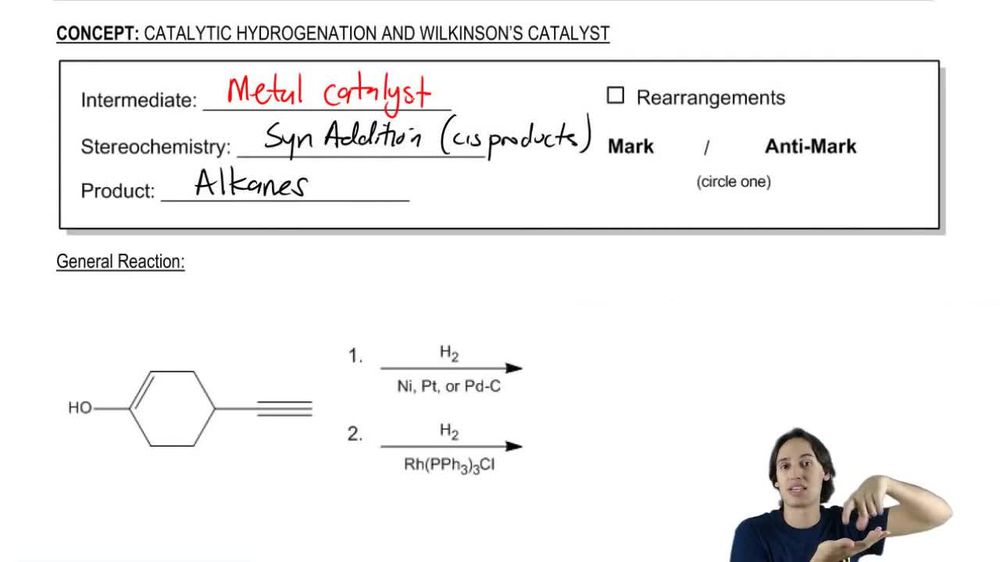
Step 1: Recognize the type of reaction occurring in both cases. The addition of H2 in the presence of a metal catalyst (Pt or Ni) is a hydrogenation reaction, which converts alkenes into alkanes by adding hydrogen atoms across the double bond.
Step 2: For part (a), identify the structure of but-1-ene. It is a linear alkene with a double bond between the first and second carbon atoms. The hydrogenation reaction will break the double bond and add one hydrogen atom to each of the two carbons involved in the double bond.
Step 3: For part (b), identify the structure of cis-but-2-ene. It is a linear alkene with a double bond between the second and third carbon atoms, and the substituents on the double bond are on the same side (cis configuration). The hydrogenation reaction will break the double bond and add one hydrogen atom to each of the two carbons involved in the double bond.
Step 4: Consider stereochemistry. In hydrogenation reactions, the addition of hydrogen atoms occurs on the same face of the molecule (syn addition). However, since the product is an alkane (saturated hydrocarbon), stereochemistry is no longer relevant because alkanes do not have geometric isomers.
Step 5: Write the expected major product for each reaction. For part (a), the product will be butane (CH3-CH2-CH2-CH3). For part (b), the product will also be butane (CH3-CH2-CH2-CH3), as the cis configuration of the starting material does not affect the final alkane product.
Verified video answer for a similar problem:
This video solution was recommended by our tutors as helpful for the problem above
Video duration:
6m
Play a video:
0 Comments
Key Concepts
Here are the essential concepts you must grasp in order to answer the question correctly.
Hydrogenation
Hydrogenation is a chemical reaction that involves the addition of hydrogen (H2) to an unsaturated compound, typically alkenes or alkynes, in the presence of a catalyst such as platinum (Pt) or nickel (Ni). This process converts double or triple bonds into single bonds, resulting in saturated hydrocarbons. The stereochemistry of the product can vary depending on the substrate and conditions, but generally, hydrogenation leads to the formation of more stable, saturated products.
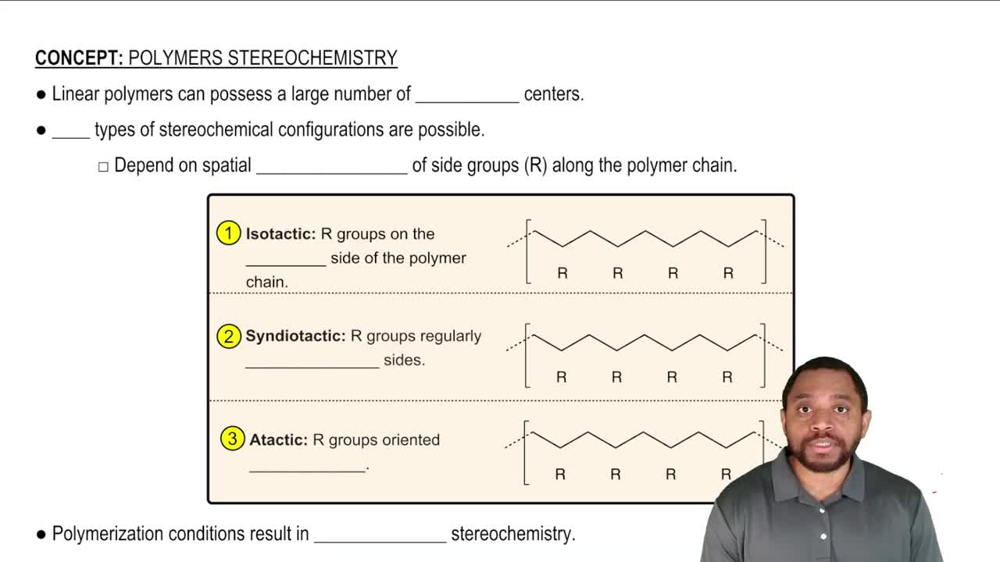
Stereochemistry refers to the study of the spatial arrangement of atoms in molecules and how this affects their chemical behavior. In reactions involving alkenes, the configuration of substituents around the double bond can lead to different stereoisomers, such as cis and trans forms. Understanding stereochemistry is crucial for predicting the major product of reactions, especially when dealing with chiral centers or when specific stereochemical outcomes are required.
Catalytic hydrogenation conditions involve the use of a metal catalyst (like Pt or Ni) under specific temperature and pressure settings to facilitate the addition of hydrogen to alkenes. The choice of catalyst and reaction conditions can influence the rate of reaction and the selectivity of the product. For example, using different catalysts can lead to variations in the stereochemical outcome of the hydrogenation, making it essential to consider these factors when predicting the major product.