Because deuterium behaves like hydrogen in chemical reactions yet is detected differently, chemists use the incorporation of deuterium to better understand the subtleties of reaction mechanisms. Deuterium is incorporated by replacing H₂ with D₂ in the hydrogenation reaction. Identify the product expected when the alkenes in Assessment 9.34 react with D₂ and Pd/C. [Don't worry about showing all diastereomers.]
Verified step by step guidance
1
Identify the structure of the alkene given in Assessment 9.34. Alkenes are hydrocarbons containing a carbon-carbon double bond, which is the site of reactivity in hydrogenation reactions.
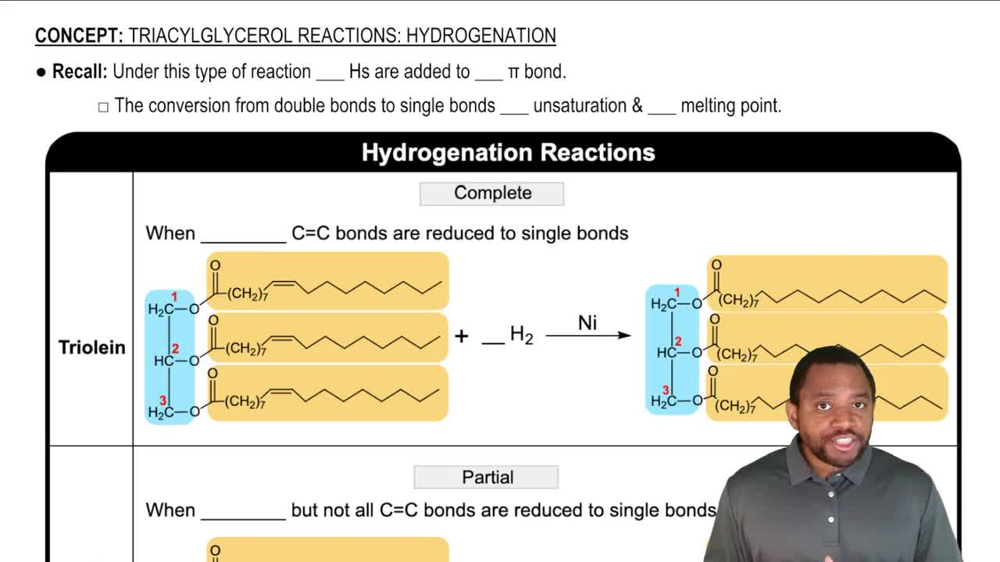
Understand the concept of hydrogenation. In a typical hydrogenation reaction, an alkene reacts with hydrogen gas (H₂) in the presence of a catalyst, such as palladium on carbon (Pd/C), to form an alkane. The double bond is converted into a single bond, and hydrogen atoms are added to the carbon atoms involved in the double bond.
Replace hydrogen gas (H₂) with deuterium gas (D₂) in the reaction. Deuterium (D) is an isotope of hydrogen with an additional neutron, making it heavier but chemically similar. In this reaction, deuterium will add across the double bond instead of hydrogen.
Consider the stereochemistry of the reaction. Since the problem states not to worry about showing all diastereomers, focus on the addition of deuterium across the double bond. The addition is typically syn, meaning both deuterium atoms add to the same side of the double bond.
Write the expected product structure. The alkene will be converted into an alkane, with deuterium atoms added to the carbon atoms that were originally part of the double bond. Use the structure of the original alkene to determine the placement of deuterium atoms in the product.
Verified video answer for a similar problem:
This video solution was recommended by our tutors as helpful for the problem above
Video duration:
4m
Play a video:
0 Comments
Key Concepts
Here are the essential concepts you must grasp in order to answer the question correctly.
Deuterium
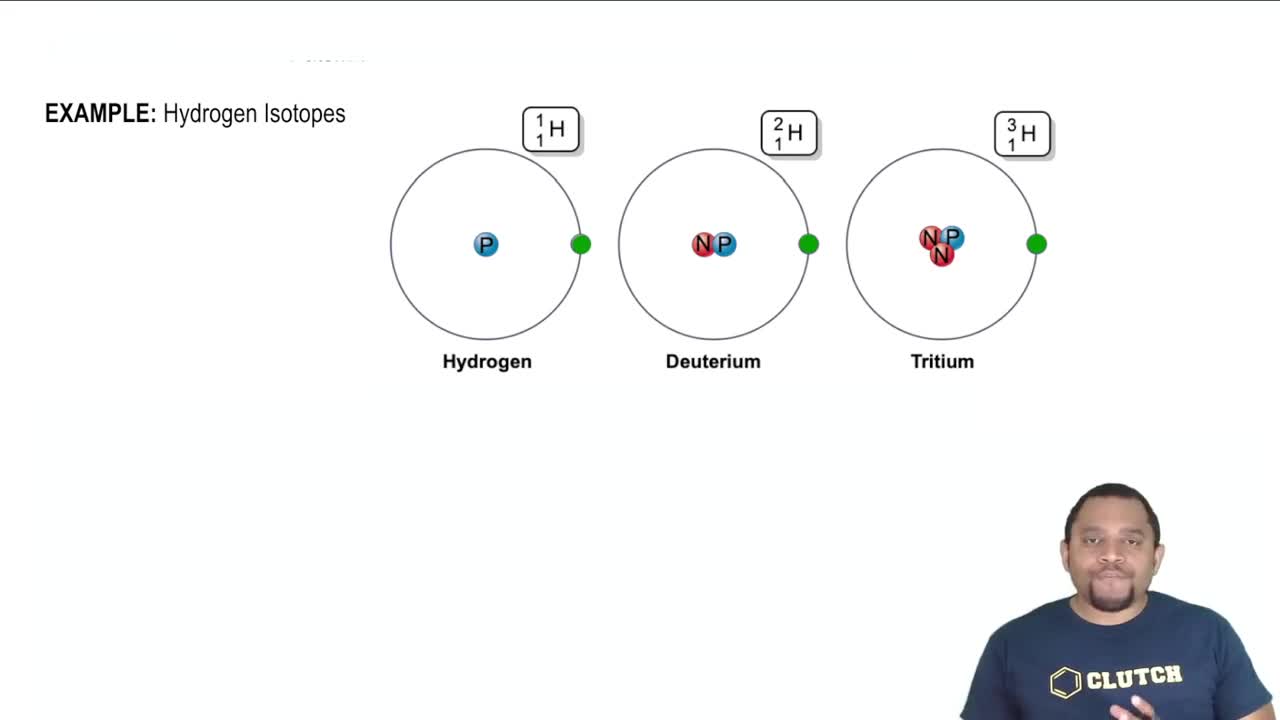
Deuterium is an isotope of hydrogen with one neutron, making it heavier than the common hydrogen isotope. In chemical reactions, deuterium behaves similarly to hydrogen but can be detected differently due to its distinct mass. This property allows chemists to use deuterium as a tracer in reaction mechanisms to study subtle changes and pathways.
Hydrogenation is a chemical reaction where hydrogen molecules (H₂) are added to unsaturated compounds, typically alkenes, converting them into saturated compounds, such as alkanes. In the presence of a catalyst like palladium on carbon (Pd/C), the reaction proceeds efficiently, allowing for the addition of hydrogen or deuterium across the double bond of alkenes.
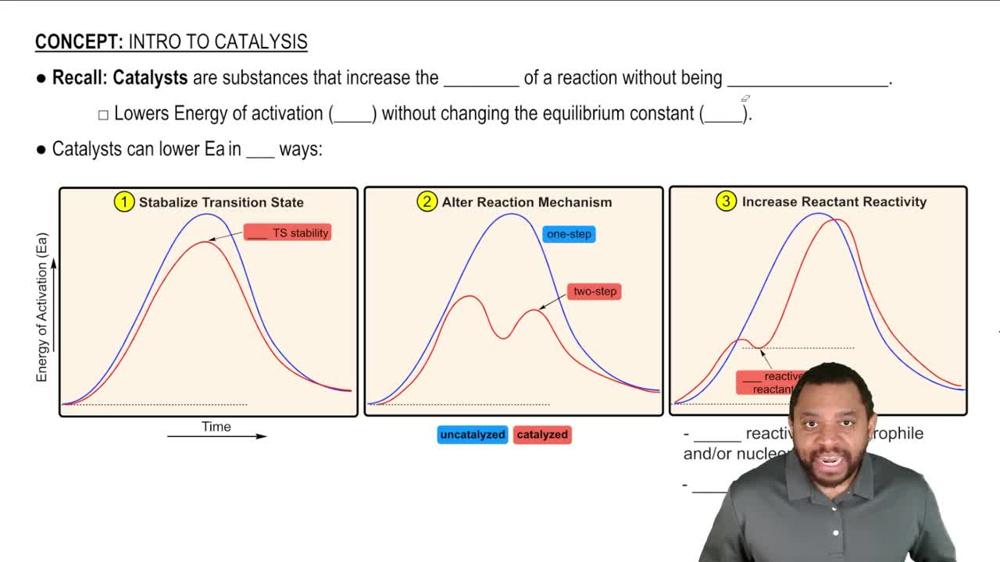
Palladium on carbon (Pd/C) is a common catalyst used in hydrogenation reactions. It facilitates the addition of hydrogen or deuterium to alkenes by providing a surface for the reaction to occur, lowering the activation energy, and increasing the reaction rate. Pd/C is particularly effective in promoting the addition of D₂ to alkenes, resulting in the formation of deuterated alkanes.