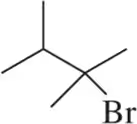
Suggest an alkene that, upon reaction with the appropriate hydrohalic acid, will produce only the alkyl halide shown. [Ignore stereochemistry.] (b)
Verified step by step guidance
1
Identify the structure of the alkyl halide product. Determine the carbon skeleton and the position of the halogen atom in the alkyl halide.
Consider the mechanism of hydrohalic acid addition to alkenes. The reaction typically follows Markovnikov's rule, where the halogen adds to the more substituted carbon.
Determine the possible alkene structures that could lead to the given alkyl halide. The alkene should have a double bond positioned such that, upon addition of the hydrohalic acid, the halogen ends up on the correct carbon as per the product structure.
Select the alkene that, when reacted with the hydrohalic acid, will follow Markovnikov's rule and produce the desired alkyl halide. Ensure that the alkene structure matches the carbon skeleton of the product.
Verify that the chosen alkene will not lead to any other major products. Consider the stability of the carbocation intermediate formed during the reaction to ensure that the reaction proceeds as expected.
Verified video answer for a similar problem:
This video solution was recommended by our tutors as helpful for the problem above
Video duration:
4m
Play a video:
0 Comments
Key Concepts
Here are the essential concepts you must grasp in order to answer the question correctly.
Markovnikov's Rule
Markovnikov's Rule states that in the addition of HX (hydrohalic acid) to an alkene, the hydrogen atom will attach to the carbon with more hydrogen atoms, and the halide will attach to the carbon with fewer hydrogen atoms. This rule helps predict the major product of the reaction, ensuring the halide ends up on the more substituted carbon.
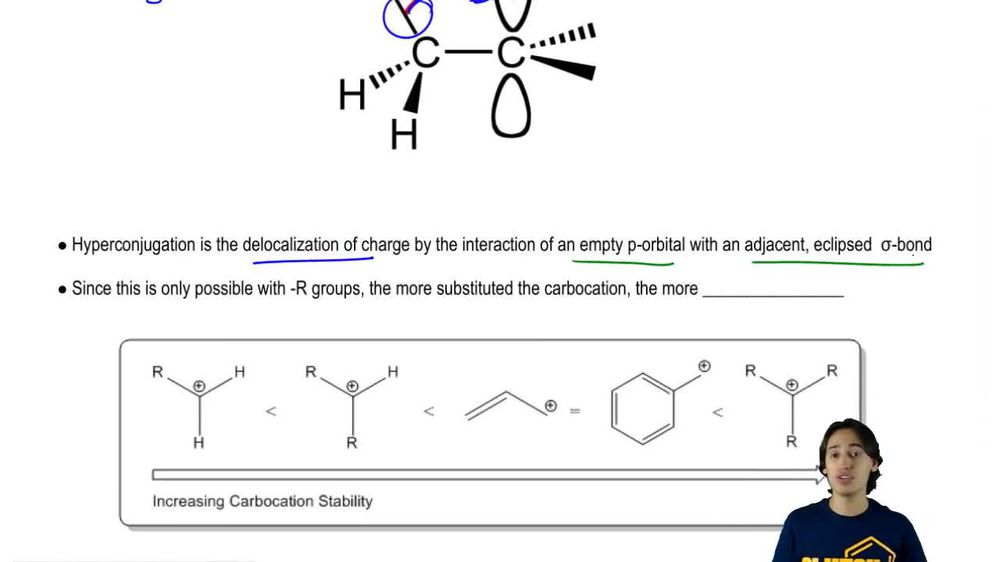
Carbocation stability is crucial in determining the outcome of alkene reactions with hydrohalic acids. More substituted carbocations (tertiary > secondary > primary) are more stable due to hyperconjugation and inductive effects. The formation of the most stable carbocation intermediate guides the regioselectivity of the reaction, influencing the final product.
The structure of the alkene determines the possible carbocation intermediates and the final product distribution. Identifying the correct alkene involves understanding its substitution pattern, which affects the regioselectivity of the addition reaction. The alkene must be chosen such that it leads to the exclusive formation of the desired alkyl halide upon reaction with the hydrohalic acid.