
Textbook Question
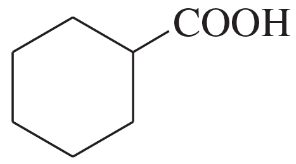
Draw a Lewis structure, and classify each of the following compounds. The possible classifications are as follows:
alcohol
ether
ketone
aldehyde
carboxylic acid
alkene
(f)
(g)
929
views

 Verified step by step guidance
 04:12
04:12
 02:36
02:36 08:41
08:41Draw a Lewis structure, and classify each of the following compounds. The possible classifications are as follows:
alcohol
ether
ketone
aldehyde
carboxylic acid
alkene
(f)
(g)
Draw a Lewis structure, and classify each of the following compounds:
(a) CH3CH2CONHCH3
(b) (CH3CH2)2NH
Draw a Lewis structure, and classify each of the following compounds. The possible classifications are as follows:
alcohol
ether
ketone
aldehyde
carboxylic acid
alkene
(h)
(i)
Draw a Lewis structure, and classify each of the following compounds. The possible classifications are as follows:
alcohol
ether
ketone
aldehyde
carboxylic acid
alkene
(a) CH2CHCHO
(b) CH3CH2CH(OH)CH3
(c) CH3COCH2CH3
Classify the following hydrocarbons, and draw a Lewis structure for each one. A compound may fit into more than one of the following classifications:
alkane
alkene
alkyne
cycloalkane
cycloalkene
cycloalkyne
aromatic
hydrocarbon
(g)
(h)
(i)
Classify the following hydrocarbons, and draw a Lewis structure for each one. A compound may fit into more than one of the following classifications:
alkane
alkene
alkyne
cycloalkane
cycloalkene
cycloalkyne
aromatic
hydrocarbon
(d)
(e)
(f)