Ch. 16 - Aromatic Compounds
Wade - Organic Chemistry 9th Edition
Wade9th EditionOrganic ChemistryISBN: 9780135213728Not the one you use?Change textbook
Chapter 16, Problem 35(1)a,b,c

Some of the following compounds show aromatic properties, and others do not.
1. Predict which ones are likely to be aromatic, and explain why they are aromatic.
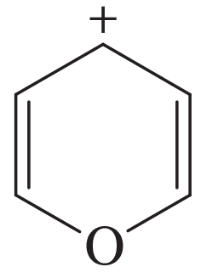
(a)
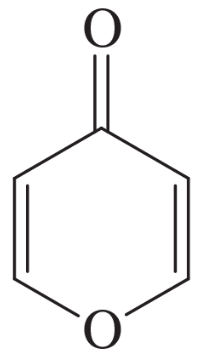
(b)
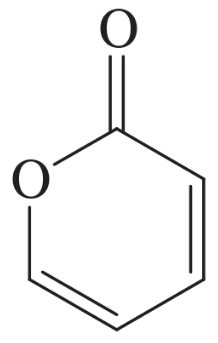
(c)

Verified step by step guidance
1
Step 1: Recall the criteria for aromaticity. A compound is aromatic if it satisfies the following conditions: (a) It is cyclic, (b) It is planar, (c) It has a conjugated π-electron system, and (d) It follows Huckel's rule, which states that the molecule must have (4n + 2) π-electrons, where n is a non-negative integer.
Step 2: Analyze compound (i). The structure is a six-membered ring with alternating double bonds (a conjugated π-electron system). The positive charge on the oxygen atom contributes to the delocalization of electrons, making the system planar and cyclic. Count the π-electrons to check if it satisfies Huckel's rule.
Step 3: Analyze compound (ii). The structure is a six-membered ring with alternating double bonds and a ketone group. The conjugated π-electron system is present, and the molecule appears cyclic and planar. Count the π-electrons to determine if it satisfies Huckel's rule.
Step 4: Analyze compound (iii). The structure is a six-membered ring with alternating double bonds and a ketone group. The conjugated π-electron system is present, and the molecule appears cyclic and planar. Count the π-electrons to determine if it satisfies Huckel's rule.
Step 5: Compare the π-electron counts for each compound to Huckel's rule (4n + 2). Determine which compounds satisfy all the criteria for aromaticity and explain why they are aromatic or not based on the analysis.

Verified video answer for a similar problem:

This video solution was recommended by our tutors as helpful for the problem above.
Video duration:
11m
Was this helpful?

Key Concepts

Here are the essential concepts you must grasp in order to answer the question correctly.

Aromaticity

Aromaticity refers to a property of cyclic compounds that exhibit enhanced stability due to the delocalization of π electrons across the ring structure. For a compound to be aromatic, it must be cyclic, planar, and follow Hückel's rule, which states that it should have (4n + 2) π electrons, where n is a non-negative integer.
Recommended video:
Guided course
08:19
Intro to Aromaticity

Hückel's Rule

Hückel's rule is a criterion used to determine the aromaticity of a compound. It states that a planar, cyclic molecule is aromatic if it contains a total of (4n + 2) π electrons in its conjugated system. This rule helps predict the stability and reactivity of aromatic compounds compared to non-aromatic or anti-aromatic compounds.
Recommended video:
Guided course
03:54
The 18 and 16 Electron Rule

Conjugation

Conjugation occurs when p-orbitals overlap across adjacent bonds, allowing for the delocalization of π electrons. This delocalization contributes to the stability of aromatic compounds. In the context of the question, identifying conjugated systems within the given structures is essential for determining their aromatic properties.
Recommended video:
Guided course
03:27
Conjugated states
Related Practice
Textbook Question

Each of the following heterocycles includes one or more nitrogen atoms. Classify each nitrogen atom as strongly basic or weakly basic, according to the availability of its lone pair of electrons.

(d)

(e)

1420
views

Textbook Question

Some of the following compounds show aromatic properties, and others do not.

1. Predict which ones are likely to be aromatic, and explain why they are aromatic.

2. Predict which nitrogen atoms are more basic than water and which are less basic.

(d)

675
views
Textbook Question

The following molecules and ions are grouped by similar structures. Classify each as aromatic, antiaromatic, or nonaromatic. For the aromatic and antiaromatic species, give the number of pi electrons in the ring.

(g)

522
views
Textbook Question

Some of the following compounds show aromatic properties, and others do not.

1. Predict which ones are likely to be aromatic, and explain why they are aromatic.

2. Predict which nitrogen atoms are more basic than water and which are less basic.

(e)

484
views
Textbook Question

Each of the following heterocycles includes one or more nitrogen atoms. Classify each nitrogen atom as strongly basic or weakly basic, according to the availability of its lone pair of electrons.

(a)

(b)

(c)

1425
views
Textbook Question

Some of the following compounds show aromatic properties, and others do not.

1. Predict which ones are likely to be aromatic, and explain why they are aromatic.

2. Predict which nitrogen atoms are more basic than water and which are less basic.

(f)

503
views