
Textbook Question
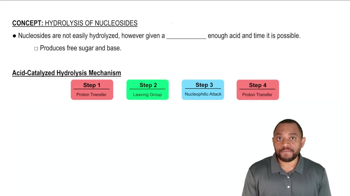
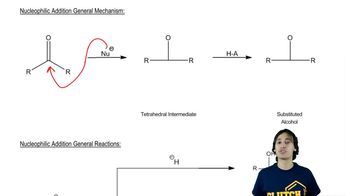
Propose a mechanism for the hydrolysis of N,N-dimethylacetamide
(b) under acidic conditions.
1538
views

 Verified step by step guidance
 0:55
0:55
 08:27
08:27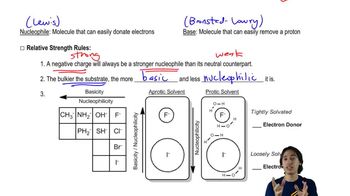 06:21
06:21Propose a mechanism for the hydrolysis of N,N-dimethylacetamide
(b) under acidic conditions.
Show how the following ketones might be synthesized from the indicated acids, using any necessary reagents.
(a) propiophenone from propionic acid (using Friedel–Crafts acylation)
Propose a mechanism for the base-promoted hydrolysis of γ-butyrolactone:
Draw the important resonance contributors for both resonance-stabilized cations (in brackets) in the mechanism for acid-catalyzed hydrolysis of an amide.
The mechanism for acidic hydrolysis of a nitrile resembles the basic hydrolysis, except that the nitrile is first protonated, activating it toward attack by a weak nucleophile (water). Under acidic conditions, the proton transfer (tautomerism) involves protonation on nitrogen followed by deprotonation on oxygen. Propose a mechanism for the acid-catalyzed hydrolysis of benzonitrile to benzamide.
Propose a mechanism for the basic hydrolysis of benzonitrile to the benzoate ion and ammonia.