Ch. 22 - Condensations and Alpha Substitutions of Carbonyl Compounds
Wade - Organic Chemistry 9th Edition
Wade9th EditionOrganic ChemistryISBN: 9780135213728Not the one you use?Change textbook
Chapter 22, Problem 31

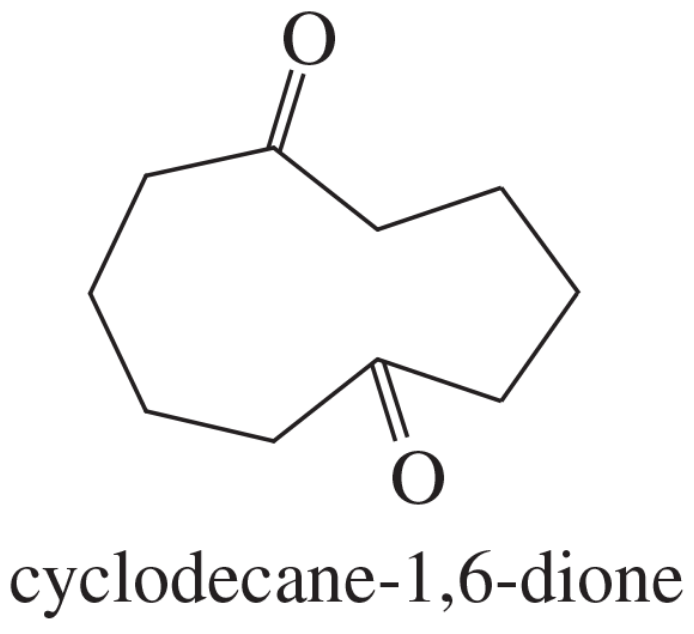
When cyclodecane-1,6-dione is treated with sodium carbonate, the product gives a UV spectrum similar to that of 1-acetyl-2-methylcyclopentene. Propose a structure for the product, and give a mechanism for its formation.

Verified step by step guidance
1
Identify the starting material, cyclodecane-1,6-dione, which is a cyclic diketone with ketone groups at positions 1 and 6. Recognize that the reaction involves sodium carbonate, a weak base, which can facilitate enolate formation and intramolecular reactions.
Consider the possibility of an intramolecular aldol condensation. Sodium carbonate can deprotonate one of the alpha-hydrogens adjacent to a ketone group, forming an enolate ion. This enolate can act as a nucleophile and attack the carbonyl carbon of the other ketone group within the same molecule.
Propose the formation of a new carbon-carbon bond between the enolate and the carbonyl carbon, resulting in a beta-hydroxyketone intermediate. This intermediate is unstable under the reaction conditions and will undergo dehydration (loss of water) to form an alpha, beta-unsaturated ketone.
Analyze the UV spectrum similarity to 1-acetyl-2-methylcyclopentene. This suggests the product contains a conjugated system, likely a cyclopentene ring with an alpha, beta-unsaturated ketone functional group. The reaction likely involves ring contraction from the 10-membered ring to a 5-membered ring during the aldol condensation.
Propose the final product structure as 2-methyl-5-cyclopentenone, which is consistent with the UV spectrum data and the mechanism of intramolecular aldol condensation followed by dehydration.

Verified video answer for a similar problem:

This video solution was recommended by our tutors as helpful for the problem above.
Was this helpful?

Key Concepts

Here are the essential concepts you must grasp in order to answer the question correctly.

Cyclodecane-1,6-dione Structure

Cyclodecane-1,6-dione is a cyclic diketone with two carbonyl groups located at the 1 and 6 positions of a ten-membered carbon ring. Understanding its structure is crucial for predicting how it will react with sodium carbonate, as the presence of carbonyl groups can influence reactivity and the formation of new bonds during the reaction.
Recommended video:
Guided course
03:04
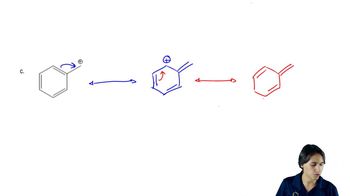
Drawing Resonance Structures

Mechanism of Nucleophilic Attack

The reaction of cyclodecane-1,6-dione with sodium carbonate likely involves a nucleophilic attack on the carbonyl carbon by a carbonate ion. This mechanism is essential for understanding how the product is formed, as it illustrates the steps involved in the conversion of the diketone to the final product, including any intermediate species that may arise during the reaction.
Recommended video:
Guided course
08:27
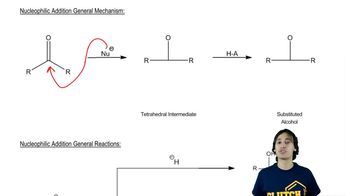
Nucleophilic Addition

UV Spectroscopy in Organic Chemistry

UV spectroscopy is a technique used to analyze the electronic transitions in molecules, particularly those with conjugated systems. The similarity in UV spectra between the product and 1-acetyl-2-methylcyclopentene suggests that the product likely contains a similar conjugated system, which is important for deducing the structure of the product and understanding its stability and reactivity.
Recommended video:
2:56
The UV-Vis Spectroscopy Concept 1