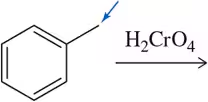
Calculate the oxidation numbers for the indicated atoms. a.
Verified step by step guidance
1
Identify the structure of the starting material. The image shows a benzene ring with a side chain, which is likely a primary alcohol or an aldehyde, given the context of oxidation reactions.
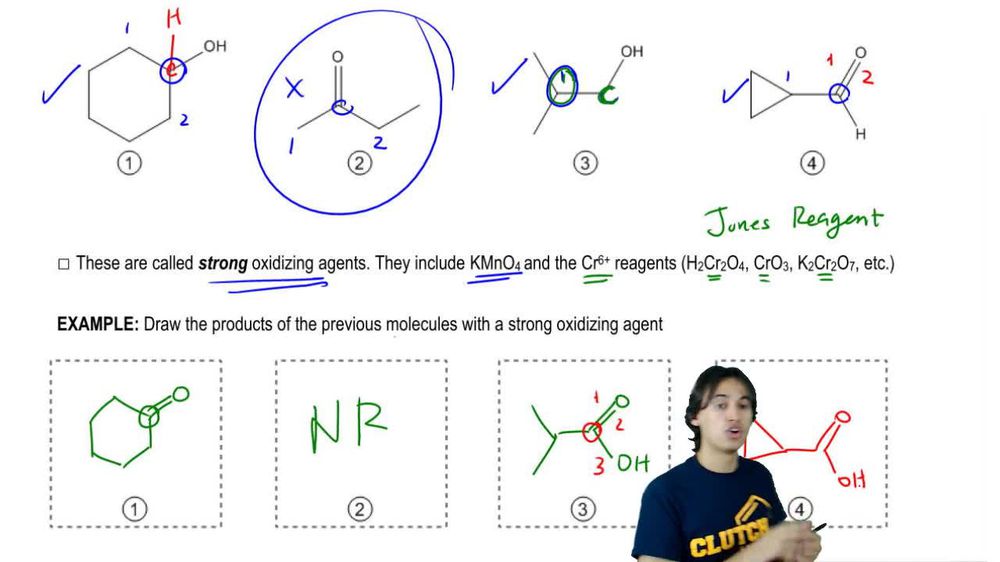
Recognize the oxidizing agent. In this case, H₂CrO₄ (chromic acid) is a strong oxidizing agent commonly used to oxidize primary alcohols to carboxylic acids and secondary alcohols to ketones.
Determine the oxidation state of the carbon atom in the side chain before the reaction. If the side chain is a primary alcohol (R-CH₂OH), the carbon attached to the OH group is in the -1 oxidation state.
Predict the product of the reaction. H₂CrO₄ will oxidize the primary alcohol to a carboxylic acid (R-COOH), changing the oxidation state of the carbon from -1 to +3.
Calculate the change in oxidation number for the carbon atom. The change from -1 to +3 indicates an increase in oxidation state, confirming that oxidation has occurred.
Verified video answer for a similar problem:
This video solution was recommended by our tutors as helpful for the problem above
Play a video:
0 Comments
Key Concepts
Here are the essential concepts you must grasp in order to answer the question correctly.
Oxidation Numbers
Oxidation numbers are a way to keep track of electrons in atoms as they undergo chemical reactions. They represent the hypothetical charge an atom would have if all bonds were ionic. In organic chemistry, oxidation numbers help determine how electrons are transferred in reactions, especially in redox processes. For example, in the reaction with H2CrO4, identifying the oxidation state of carbon atoms in the benzene ring is crucial.
Chromic acid (H2CrO4) is a strong oxidizing agent commonly used in organic chemistry to oxidize alcohols to ketones or carboxylic acids. It works by increasing the oxidation state of carbon atoms, typically converting primary alcohols to carboxylic acids and secondary alcohols to ketones. Understanding its role in the reaction helps predict the changes in oxidation numbers of the involved atoms.
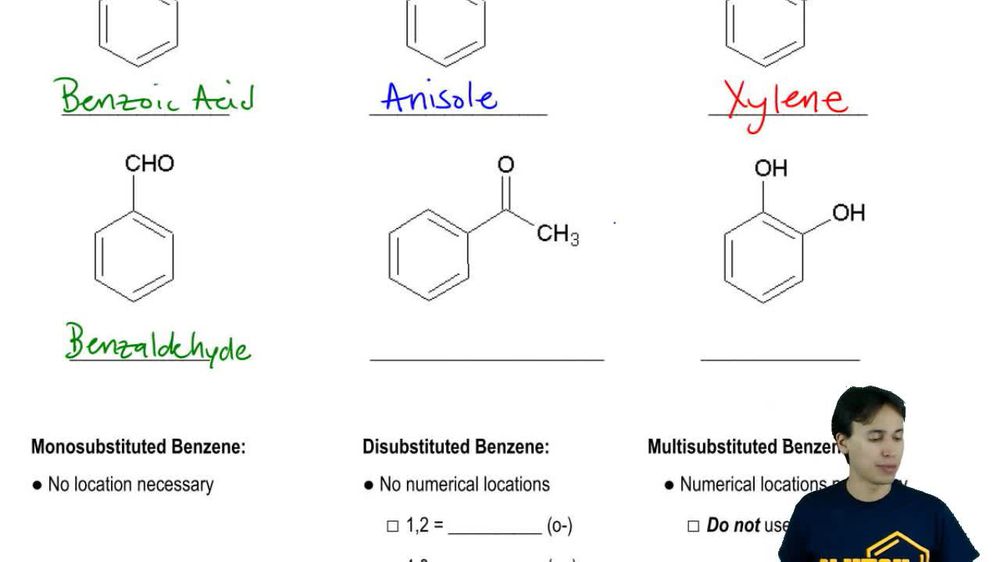
The benzene ring is a stable, aromatic hydrocarbon with a hexagonal structure and alternating double bonds. Its stability is due to resonance, where electrons are delocalized over the ring. In reactions, the benzene ring can influence the reactivity of attached groups, such as the side chain in the given structure. Recognizing the benzene ring's properties is essential for understanding how it affects the oxidation process in the reaction.

 Verified step by step guidance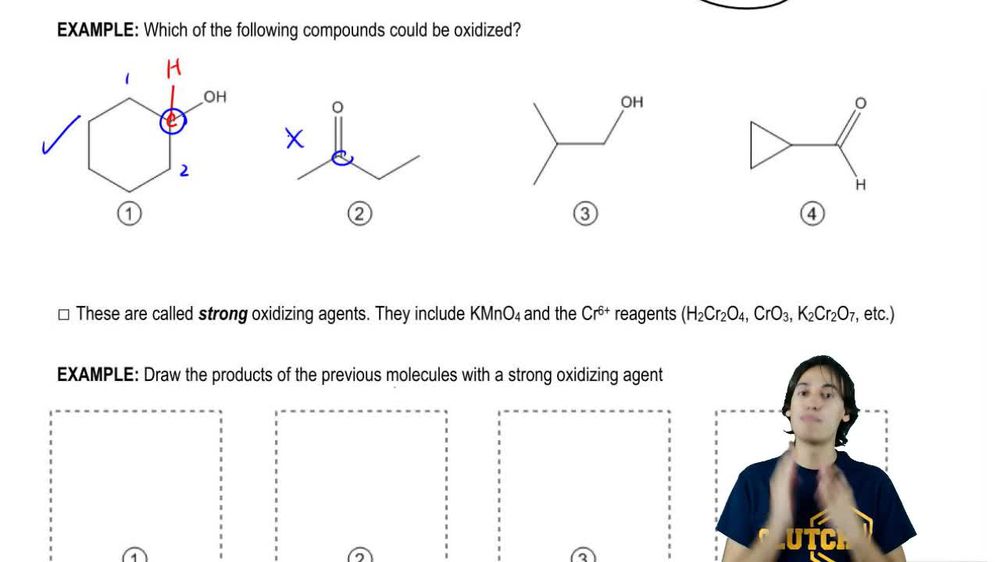
 03:40
03:40