Calculate the oxidation numbers for the indicated atoms. b.
Verified step by step guidance
1
Identify the atom for which you need to calculate the oxidation number. In the image, the arrow points to the carbon atom in the carboxylic acid functional group.
Understand the general rules for assigning oxidation numbers: Oxygen is typically -2, hydrogen is +1, and carbon's oxidation number can vary depending on its bonding.
Consider the structure of the carboxylic acid group. The carbon atom is bonded to two oxygen atoms and one hydrogen atom. The carbon is also bonded to the phenyl group.
Calculate the oxidation number for the carbon atom. Assign oxidation numbers to the atoms directly bonded to the carbon: Oxygen is -2, hydrogen is +1, and the phenyl group is considered neutral for this calculation.
Use the formula for oxidation number calculation: The sum of oxidation numbers in a neutral compound is zero. Set up the equation based on the bonds: x + (-2) + (-2) + (+1) = 0, where x is the oxidation number of the carbon atom.
Verified video answer for a similar problem:
This video solution was recommended by our tutors as helpful for the problem above
Video duration:
2m
Play a video:
0 Comments
Key Concepts
Here are the essential concepts you must grasp in order to answer the question correctly.
Oxidation Number
The oxidation number is a theoretical charge assigned to an atom in a molecule, representing the number of electrons lost or gained by the atom. It helps in understanding electron transfer in redox reactions. For organic compounds, it is calculated by considering the electronegativity of atoms and the bonding environment, with more electronegative atoms assigned negative oxidation states.
Functional groups are specific groups of atoms within molecules that determine the chemical properties of those molecules. In the given structure, the hydroxyl group (-OH) and the carbonyl group (C=O) are key functional groups. These groups influence the molecule's reactivity and the oxidation state of the carbon atoms they are attached to, as they affect electron distribution.
Electronegativity is the tendency of an atom to attract electrons in a chemical bond. It plays a crucial role in determining oxidation numbers, as more electronegative atoms pull electrons towards themselves, affecting the oxidation state of bonded atoms. In the structure, oxygen is more electronegative than carbon, influencing the oxidation states of the carbon atoms in the carbonyl and hydroxyl groups.

 2:52 minutes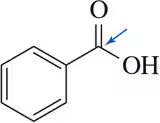
 Verified step by step guidance
 03:40
03:40