
Textbook Question
Calculate the pH of the following solutions.
a. 5.00 g of HBr in 100 mL of aqueous solution
b. 1.50 g of NaOH in 50 mL of aqueous solution
2314
views

 Verified step by step guidance
 02:49
02:49
 2:56
2:56 07:45
07:45Calculate the pH of the following solutions.
a. 5.00 g of HBr in 100 mL of aqueous solution
b. 1.50 g of NaOH in 50 mL of aqueous solution
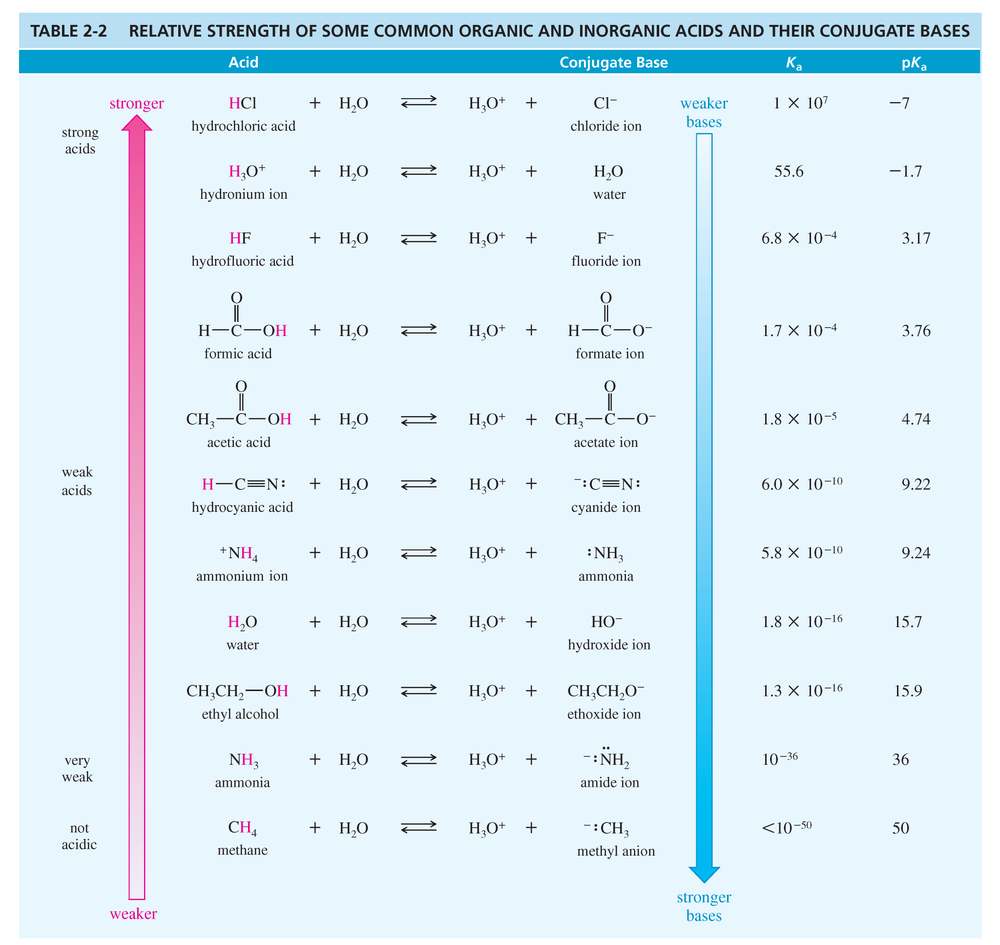
Ammonia appears in [TABLE 2-2 ] as both an acid and a conjugate base. a. Explain how ammonia can act as both an acid and a base. Which of these roles does it commonly fill in aqueous solutions?
b. Show how water can serve as both an acid and a base.
Ethanol, methylamine, and acetic acid are all amphoteric, reacting as either acids or bases depending on the conditions.
a. Rank ethanol, methylamine, and acetic acid in decreasing order of acidity. In each case, show the equation for the reaction with a generic base (B:−) to give the conjugate base.
Circle the member of each pair that is more soluble in water.
a. CH3CH2OCH2CH3 or CH3CH2CH2CH2CH3
b. CH3CH2OCH2CH3 or CH3CH2CH2OH
c. CH3CH2NHCH3 or CH3CH2CH2CH3
d. CH3CH2OH or CH3CH2CH2CH2OH
e.
Ethanol, methylamine, and acetic acid are all amphoteric, reacting as either acids or bases depending on the conditions.
b. Rank ethanol, methylamine, and acetic acid in decreasing order of basicity. In each case, show the equation for the reaction with a generic acid (HA) to give the conjugate acid.
Write equations for the following acid–base reactions. Use the information in Table 2-2 or Appendix 4 to predict whether the equilibrium will favor the reactants or the products.
a. HCOOH + –CN
b. CH3COO– + CH3OH
c. (CH3)2CHOH + NaNH2