Ch.11 - Reactions of Alcohols
Wade - Organic Chemistry 9th Edition
Wade9th EditionOrganic ChemistryISBN: 9780135213728Not the one you use?Change textbook
Chapter 11, Problem 5a,b,c

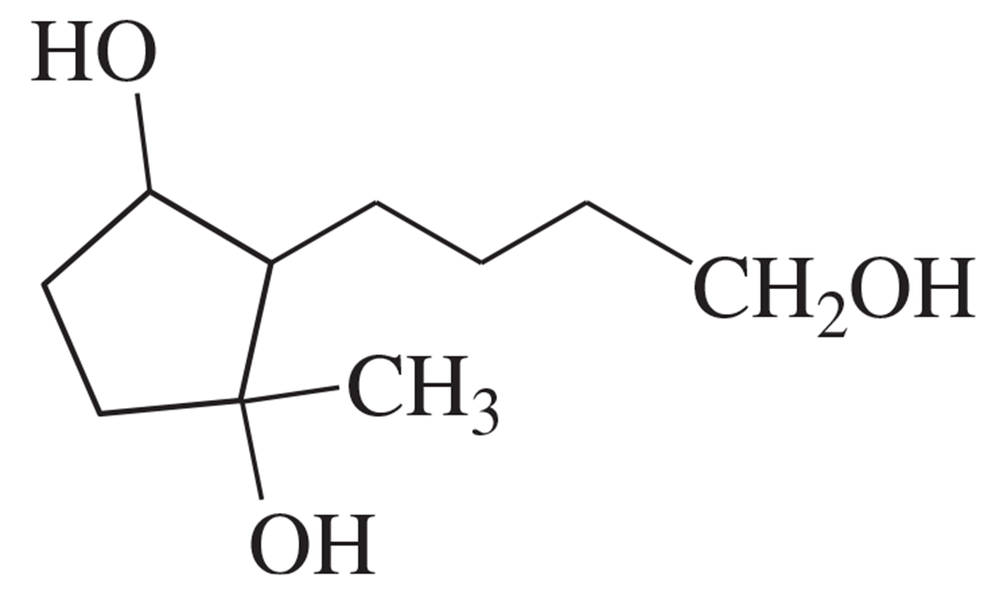
Predict the products you expect when the following starting material undergoes oxidation with an excess of each of the reagents shown below.

a. chromic acid
b. PCC (pyridinium chlorochromate)
c. sodium hypochlorite/acetic acid

Verified step by step guidance
1
Step 1: Analyze the structure of the starting material. The molecule contains multiple hydroxyl (-OH) groups, including primary, secondary, and tertiary alcohols. Each reagent will oxidize these alcohols differently based on their chemical properties.
Step 2: For chromic acid (H2CrO4), it is a strong oxidizing agent. Primary alcohols are oxidized to carboxylic acids, and secondary alcohols are oxidized to ketones. Tertiary alcohols generally do not undergo oxidation under these conditions. Identify the primary and secondary alcohols in the structure and predict their oxidation products.
Step 3: For PCC (pyridinium chlorochromate), it is a milder oxidizing agent. Primary alcohols are oxidized to aldehydes, and secondary alcohols are oxidized to ketones. Tertiary alcohols remain unaffected. Determine which alcohols in the structure will react and predict their products.
Step 4: For sodium hypochlorite (NaOCl) in acetic acid, it is a strong oxidizing agent similar to chromic acid. Primary alcohols are oxidized to carboxylic acids, and secondary alcohols are oxidized to ketones. Tertiary alcohols do not react. Identify the primary and secondary alcohols in the structure and predict their oxidation products.
Step 5: Summarize the expected products for each reagent based on the oxidation reactions described. Ensure that the products are consistent with the functional groups present in the starting material and the reactivity of the reagents.

Verified video answer for a similar problem:

This video solution was recommended by our tutors as helpful for the problem above.
Video duration:
8m
Was this helpful?

Key Concepts

Here are the essential concepts you must grasp in order to answer the question correctly.

Oxidation Reactions

Oxidation reactions in organic chemistry involve the loss of electrons or an increase in oxidation state, often resulting in the addition of oxygen or the removal of hydrogen. Common oxidizing agents include chromic acid and PCC, which can convert alcohols into carbonyl compounds. Understanding the specific conditions and mechanisms of these reactions is crucial for predicting the products formed.
Recommended video:
Guided course
03:20
Benzylic Oxidation

Types of Alcohols

Alcohols can be classified as primary, secondary, or tertiary based on the carbon atom to which the hydroxyl (-OH) group is attached. This classification affects their reactivity during oxidation. For instance, primary alcohols typically oxidize to aldehydes, while secondary alcohols can be oxidized to ketones, and tertiary alcohols are resistant to oxidation under mild conditions.
Recommended video:
Guided course
01:01
How to name alcohols

Reactivity of Oxidizing Agents

Different oxidizing agents have varying strengths and selectivities. Chromic acid is a strong oxidizer that can fully oxidize primary alcohols to carboxylic acids, while PCC is milder and typically oxidizes primary alcohols to aldehydes without further oxidation. Sodium hypochlorite in acetic acid can also oxidize alcohols, but its mechanism and products can differ, making it essential to understand the specific reagents used in the reaction.
Recommended video:
Guided course
03:40
Strong oxidizing agents