

Ch. 16 - Aromatic Compounds
Wade - Organic Chemistry 9th Edition
Wade9th EditionOrganic ChemistryISBN: 9780135213728Not the one you use?Change textbook
Chapter 16, Problem 42a,b,c

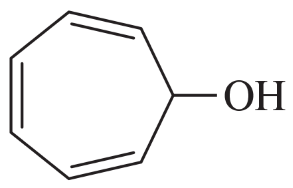
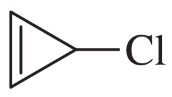
How would you convert the following compounds to aromatic compounds?
(a)
(b)
(c)

Verified step by step guidance
1
Step 1: Analyze compound (i), which is a substituted cyclopentadiene. To convert it into an aromatic compound, remove one hydrogen atom from the sp3-hybridized carbon to form a cyclopentadienyl anion. This anion will have 6 π-electrons, satisfying Huckel's rule for aromaticity.
Step 2: For compound (ii), which is a substituted phenol, the aromaticity is already present in the benzene ring. To ensure the compound remains aromatic, focus on stabilizing the hydroxyl group by resonance with the benzene ring. No additional conversion is needed for aromaticity.
Step 3: Examine compound (iii), which is a bromocyclopropane. To convert it into an aromatic compound, perform a ring-opening reaction to form a conjugated system. This can be achieved by reacting it with a base or nucleophile to eliminate the bromine atom and form a conjugated diene structure.
Step 4: Verify that each resulting structure satisfies Huckel's rule (4n+2 π-electrons) for aromaticity. For compound (i), the cyclopentadienyl anion has 6 π-electrons. For compound (ii), the benzene ring has 6 π-electrons. For compound (iii), ensure the conjugated diene forms a structure with 6 π-electrons.
Step 5: Confirm that the molecular geometry of each converted compound allows for continuous overlap of p-orbitals, which is essential for aromaticity. This ensures the compounds are planar and conjugated.

Verified video answer for a similar problem:

This video solution was recommended by our tutors as helpful for the problem above.
Video duration:
15m
Was this helpful?

Key Concepts

Here are the essential concepts you must grasp in order to answer the question correctly.

Aromaticity

Aromaticity refers to the special stability and reactivity of certain cyclic compounds that follow Hückel's rule, which states that a molecule must have (4n + 2) π electrons in a planar, cyclic structure to be considered aromatic. This property leads to unique chemical behavior, including increased stability and specific reaction pathways.
Recommended video:
Guided course
08:19
Intro to Aromaticity

Electrophilic Aromatic Substitution (EAS)

Electrophilic Aromatic Substitution is a fundamental reaction mechanism in organic chemistry where an electrophile replaces a hydrogen atom on an aromatic ring. This process is crucial for the functionalization of aromatic compounds, allowing for the introduction of various substituents while maintaining the aromatic character of the ring.
Recommended video:

Rearrangement Reactions

Rearrangement reactions involve the structural reorganization of a molecule, often leading to the formation of more stable or reactive intermediates. In the context of converting non-aromatic compounds to aromatic ones, these reactions can facilitate the necessary changes in bonding and electron distribution to achieve aromaticity.
Recommended video:
Guided course
06:28
Definition of Cope Rearrangement
Related Practice
Textbook Question

Biphenyl has the following structure.

c. The heat of hydrogenation for biphenyl is about 418 kJ/mol (100 kcal/mol). Calculate the resonance energy of biphenyl.

d. Compare the resonance energy of biphenyl with that of naphthalene and with that of two benzene rings. Explain the difference in the resonance energies of naphthalene and biphenyl.

1276
views
Textbook Question

The ribonucleosides that make up ribonucleic acid (RNA) are composed of D-ribose (a sugar) and four heterocyclic “bases.” The general structure of a ribonucleoside is shown here.

The four heterocyclic bases are cytosine, uracil, guanine, and adenine. Cytosine and uracil are called pyrimidine bases because their structures resemble pyrimidine. Guanine and adenine are called purine bases because their structures resemble purine.

b. Predict which nitrogen atoms are basic.

620
views
Textbook Question

Biphenyl has the following structure.

a. Is biphenyl a (fused) polynuclear aromatic hydrocarbon?

b. How many pi electrons are there in the two aromatic rings of biphenyl? How does this number compare with that for naphthalene?

1440
views
Textbook Question

The ribonucleosides that make up ribonucleic acid (RNA) are composed of D-ribose (a sugar) and four heterocyclic “bases.” The general structure of a ribonucleoside is shown here.

The four heterocyclic bases are cytosine, uracil, guanine, and adenine. Cytosine and uracil are called pyrimidine bases because their structures resemble pyrimidine. Guanine and adenine are called purine bases because their structures resemble purine.

a. Determine which rings of these bases are aromatic.

914
views
Textbook Question

How would you convert the following compounds to aromatic compounds?

(d)

(e)

(f)

1773
views
1
rank
Textbook Question

Anions of hydrocarbons are rare, and dianions of hydrocarbons are extremely rare. The following hydrocarbon reacts with two equivalents of butyllithium to form a dianion of formula [C8H6]2–. Propose a structure for this dianion, and suggest why it forms so readily.

658
views