Ch. 24 - Amino Acids, Peptides, and Proteins
Wade - Organic Chemistry 9th Edition
Wade9th EditionOrganic ChemistryISBN: 9780135213728Not the one you use?Change textbook
Chapter 24, Problem 19a

Draw the structure of the phenylthiohydantoin derivatives of
(a) alanine.

Verified step by step guidance
1
Understand the context: Phenylthiohydantoin (PTH) derivatives are formed during the Edman degradation process, which is used to sequence amino acids in peptides. The reaction involves the amino acid reacting with phenyl isothiocyanate (PITC) under basic conditions to form a PTH derivative.
Identify the structure of alanine: Alanine is a simple amino acid with the structure CH3-CH(NH2)-COOH. It has a methyl group (-CH3) as its side chain.
Determine the reaction mechanism: In the Edman degradation, the amino group (-NH2) of alanine reacts with phenyl isothiocyanate (C6H5-N=C=S) to form a cyclic PTH derivative. This involves the nucleophilic attack of the amino group on the carbon of the isothiocyanate group, followed by cyclization.
Draw the PTH derivative structure: The resulting PTH derivative will have a five-membered ring structure containing the sulfur atom, the phenyl group (C6H5), and the alanine side chain (-CH3). The carbonyl group (C=O) from the original alanine structure will also be part of the ring.
Ensure proper stereochemistry: Alanine is a chiral molecule, so the PTH derivative will retain the stereochemistry of the original alanine. Make sure to indicate the correct configuration (L- or D-alanine) in the final structure.

Verified video answer for a similar problem:

This video solution was recommended by our tutors as helpful for the problem above.
Video duration:
14m
Was this helpful?

Key Concepts

Here are the essential concepts you must grasp in order to answer the question correctly.

Phenylthiohydantoin (PTH) Derivatives

Phenylthiohydantoin derivatives are compounds formed by the reaction of phenylthiohydantoin with amino acids. This reaction typically involves the formation of a stable derivative that can be used for amino acid identification and analysis. The structure includes a hydantoin ring, which is a five-membered ring containing two carbonyl groups and a nitrogen atom, along with a phenylthio group that enhances the compound's stability and solubility.
Recommended video:
Guided course
02:49
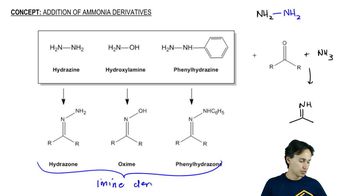
Ammonia Derivatives

Amino Acid Structure

Amino acids are organic compounds that serve as the building blocks of proteins. Each amino acid consists of a central carbon atom bonded to an amino group (-NH2), a carboxyl group (-COOH), a hydrogen atom, and a variable R group (side chain) that determines the specific properties of the amino acid. In the case of alanine, the R group is a simple methyl group (-CH3), which influences the overall structure of the PTH derivative formed.
Recommended video:
Guided course
11:14
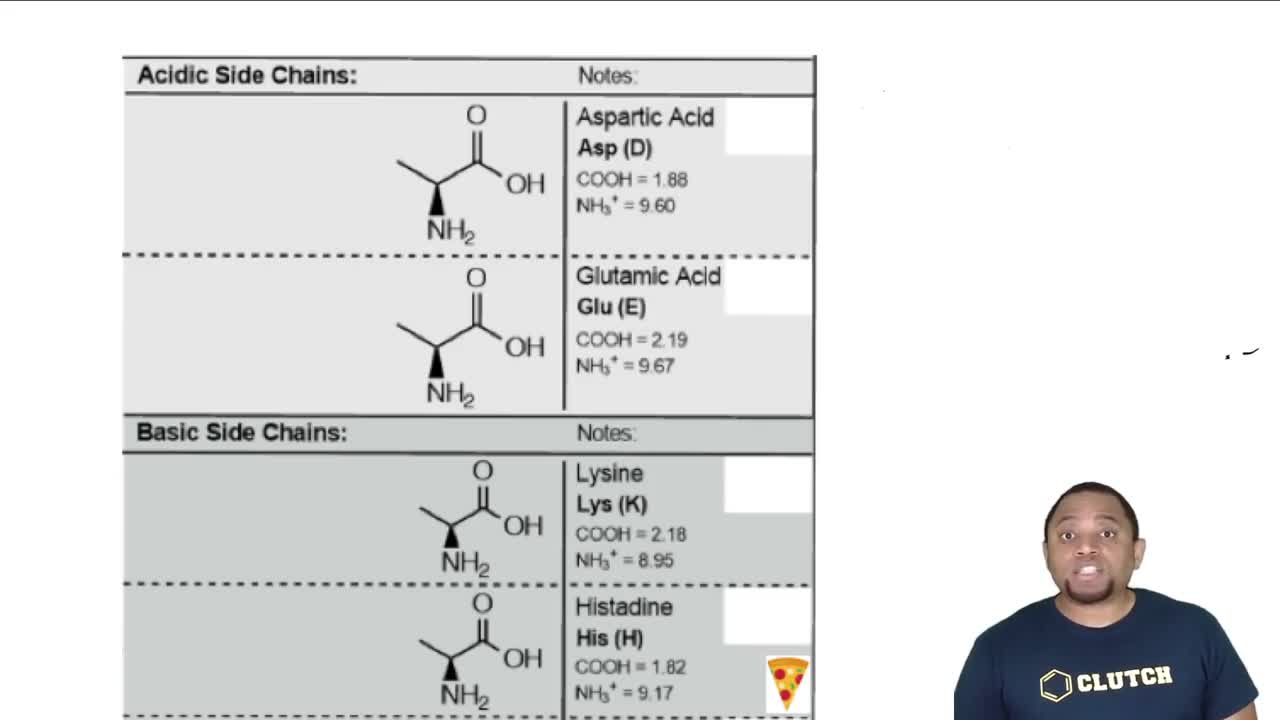
Charged Amino Acids

Chemical Structure Drawing

Drawing chemical structures involves representing the arrangement of atoms within a molecule using specific conventions. This includes depicting bonds between atoms, functional groups, and the overall geometry of the molecule. For phenylthiohydantoin derivatives, it is essential to accurately illustrate the hydantoin ring, the phenylthio group, and the side chain of the amino acid to convey the correct molecular structure and ensure clarity in communication.
Recommended video:
3:11
Chemical Reactions of Phosphate Anhydrides Concept 1