
Ch. 24 - Amino Acids, Peptides, and Proteins
Wade - Organic Chemistry 9th Edition
Wade9th EditionOrganic ChemistryISBN: 9780135213728Not the one you use?Change textbook
Chapter 24, Problem 1c

Draw three-dimensional representations of the following amino acids.
(c) D-serine

Verified step by step guidance
1
Understand the structure of serine: Serine is an amino acid with the molecular formula C3H7NO3. It contains an amino group (-NH2), a carboxylic acid group (-COOH), and a side chain with a hydroxymethyl group (-CH2OH).
Recognize the chirality of serine: Serine has a chiral center at the alpha carbon (the carbon bonded to the amino group, carboxylic acid group, and side chain). The 'D-' designation indicates the configuration of the molecule based on the D/L system, which is related to the molecule's relationship to D-glyceraldehyde.
Assign the correct stereochemistry: In the D-configuration, the amino group (-NH2) is positioned on the right side when the molecule is drawn in a Fischer projection with the carboxylic acid group at the top and the side chain at the bottom.
Convert the Fischer projection to a three-dimensional representation: Use wedge-and-dash notation to depict the spatial arrangement of the groups around the chiral center. A solid wedge represents a bond coming out of the plane toward the viewer, a dashed wedge represents a bond going behind the plane, and a straight line represents a bond in the plane of the paper.
Draw the final 3D structure: Place the carboxylic acid group (-COOH) at the top, the amino group (-NH2) on the right (coming out of the plane), the hydroxymethyl side chain (-CH2OH) on the left (going behind the plane), and the hydrogen atom on the bottom (in the plane). Ensure the stereochemistry matches the D-configuration.

Verified video answer for a similar problem:

This video solution was recommended by our tutors as helpful for the problem above.
Video duration:
1m
Was this helpful?

Key Concepts

Here are the essential concepts you must grasp in order to answer the question correctly.

Amino Acids Structure

Amino acids are organic compounds that serve as the building blocks of proteins. Each amino acid consists of a central carbon atom (the alpha carbon) bonded to an amino group (-NH2), a carboxyl group (-COOH), a hydrogen atom, and a variable side chain (R group) that determines the specific properties of the amino acid. Understanding the general structure of amino acids is essential for visualizing their three-dimensional representations.
Recommended video:
Guided course
11:14
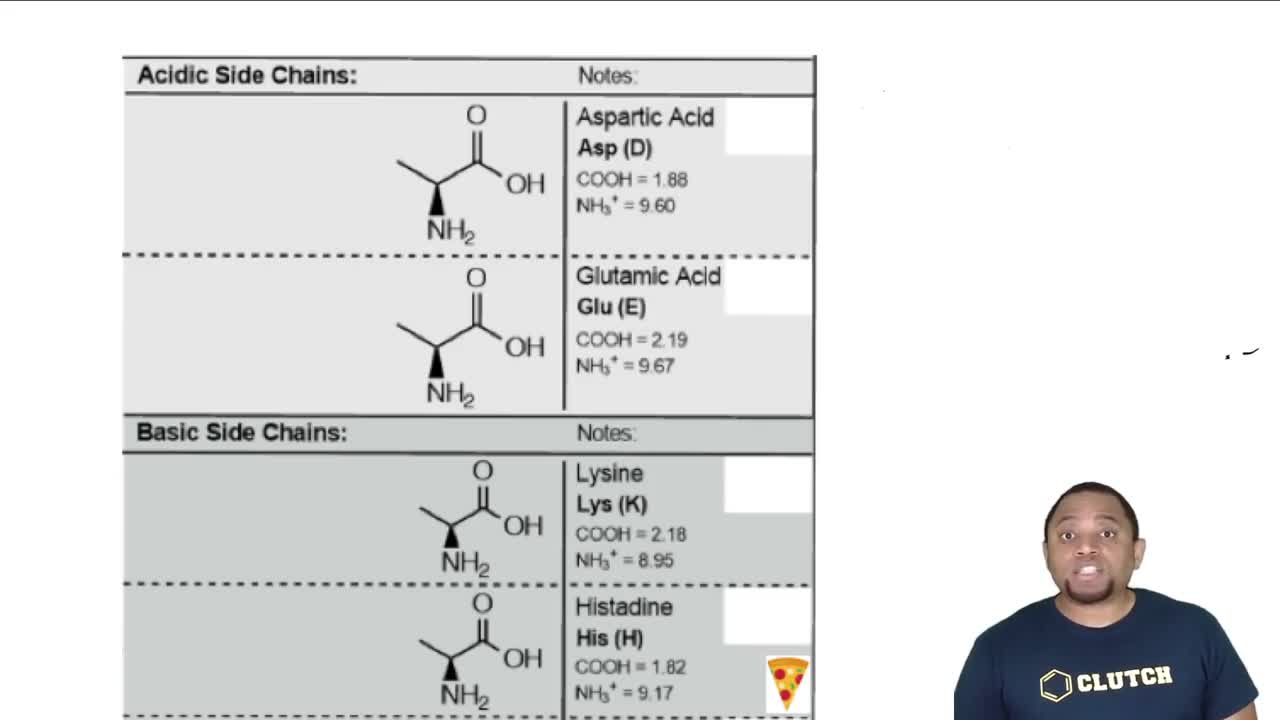
Charged Amino Acids

Chirality in Amino Acids

Chirality refers to the property of a molecule that makes it non-superimposable on its mirror image. Most amino acids, except glycine, are chiral due to the presence of four different substituents attached to the alpha carbon. D-serine, specifically, is one of the two enantiomers of serine, and recognizing its chirality is crucial for accurately drawing its three-dimensional structure.
Recommended video:
Guided course
09:36
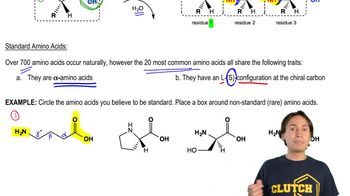
Standard Amino Acids

Three-Dimensional Molecular Representation

Three-dimensional representations of molecules, such as amino acids, can be depicted using various models, including ball-and-stick models and space-filling models. These representations help illustrate the spatial arrangement of atoms and the overall geometry of the molecule. For d-serine, understanding how to represent its functional groups and stereochemistry in three dimensions is vital for grasping its biological function and interactions.
Recommended video:
Guided course
07:44
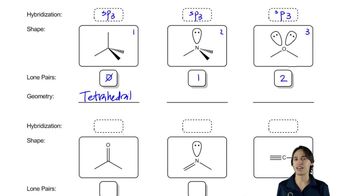
Molecular Geometry Explained.