Ch. 24 - Amino Acids, Peptides, and Proteins
Wade - Organic Chemistry 9th Edition
Wade9th EditionOrganic ChemistryISBN: 9780135213728Not the one you use?Change textbook
Chapter 24, Problem 32

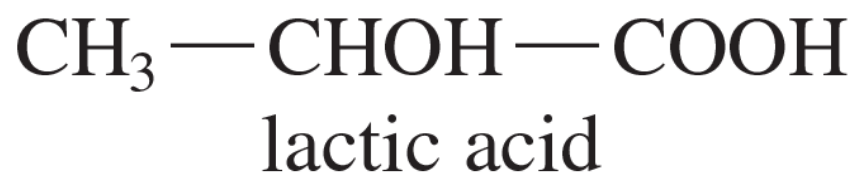
Suggest a method for the synthesis of the unnatural D enantiomer of alanine from the readily available L enantiomer of lactic acid.

Verified step by step guidance
1
Step 1: Begin with the L enantiomer of lactic acid, which has the structure CH3-CHOH-COOH. The goal is to convert this into the D enantiomer of alanine, which has the structure CH3-CH(NH2)-COOH.
Step 2: Perform a stereochemical inversion at the chiral center of lactic acid to convert the L enantiomer into the D enantiomer. This can be achieved through a series of reactions, such as converting the hydroxyl group (-OH) into a leaving group (e.g., tosylate or mesylate) and then performing an SN2 reaction with an appropriate nucleophile to invert the configuration.
Step 3: Introduce the amino group (-NH2) at the chiral center. This can be done by first converting the hydroxyl group into a ketone (oxidation reaction), followed by reductive amination using ammonia or an amine source in the presence of a reducing agent like NaBH4 or H2/Ni.
Step 4: Ensure the stereochemistry of the product is the D enantiomer of alanine. Verify the configuration using techniques such as polarimetry or chiral chromatography.
Step 5: Purify the final product to isolate the D enantiomer of alanine. Techniques such as recrystallization or chromatography can be used to ensure the purity of the synthesized compound.

Verified video answer for a similar problem:

This video solution was recommended by our tutors as helpful for the problem above.
Video duration:
3m
Was this helpful?

Key Concepts

Here are the essential concepts you must grasp in order to answer the question correctly.

Enantiomers

Enantiomers are a type of stereoisomer that are non-superimposable mirror images of each other. They have identical physical properties except for their interaction with plane-polarized light and reactions in chiral environments. Understanding enantiomers is crucial for synthesizing specific amino acids, such as distinguishing between the L and D forms of alanine.
Recommended video:
Guided course
03:23
How to solve for the percentage of each enantiomer.

Chiral Centers

A chiral center, often a carbon atom, is bonded to four different substituents, leading to the possibility of stereoisomerism. The presence of chiral centers in molecules like lactic acid and alanine is fundamental in determining their enantiomeric forms. Recognizing and manipulating these centers is essential for synthesizing the desired enantiomer in organic reactions.
Recommended video:
Guided course
05:41
Understanding Other Chiral Atoms

Synthesis Methods

Synthesis methods in organic chemistry refer to the various strategies used to construct complex molecules from simpler ones. Techniques such as asymmetric synthesis, where specific catalysts or reagents are used to favor the formation of one enantiomer over another, are vital for producing unnatural amino acids like the D enantiomer of alanine from L lactic acid.
Recommended video:
1:24
Amino Acid Synthesis: HVZ Method Concept 1
Related Practice
Textbook Question

Show how you would convert alanine to the following derivatives. Show the structure of the product in each case.

(c) N-benzyloxycarbonyl alanine

(d) tert-butyloxycarbonyl alanine

836
views

Textbook Question

Show how you would synthesize any of the standard amino acids from each starting material. You may use any necessary reagents.

(c)

1139
views
Textbook Question

Lipoic acid is often found near the active sites of enzymes, usually bound to the peptide by a long, flexible amide linkage with a lysine residue.


(a) Is lipoic acid a mild oxidizing agent or a mild reducing agent? Draw it in both its oxidized and reduced forms.

(b) Show how lipoic acid might react with two Cys residues to form a disulfide bridge.

(c) Give a balanced equation for the hypothetical oxidation or reduction, as you predicted in part (a), of an aldehyde by lipoic acid.

1358
views
Textbook Question

Aspartame (Nutrasweet®) is a remarkably sweet-tasting dipeptide ester. Complete hydrolysis of aspartame gives phenyl alanine, aspartic acid, and methanol. Mild incubation with carboxypeptidase has no effect on aspartame. Treatment of aspartame with phenyl isothiocyanate, followed by mild hydrolysis, gives the phenylthiohydantoin of aspartic acid. Propose a structure for aspartame.

1420
views
Textbook Question

Show how you would convert alanine to the following derivatives. Show the structure of the product in each case.

(a) alanine isopropyl ester

(b) N-benzoylalanine

1122
views
Textbook Question

Show how you would use the Strecker synthesis to make tryptophan. What stereochemistry would you expect in your synthetic product?

1379
views