Textbook Question
How many electrons does an atom of each of the following elements need to gain to achieve a noble gas configuration? By gaining that many electrons, which noble gas configuration is achieved?
(b) Iodine
957
views
1
rank

 Mullins 1st EditionCh. 2 - General Chemistry Translated: Finding the ElectronsProblem 14d
 Verified step by step guidance
 02:14
02:14
 04:28
04:28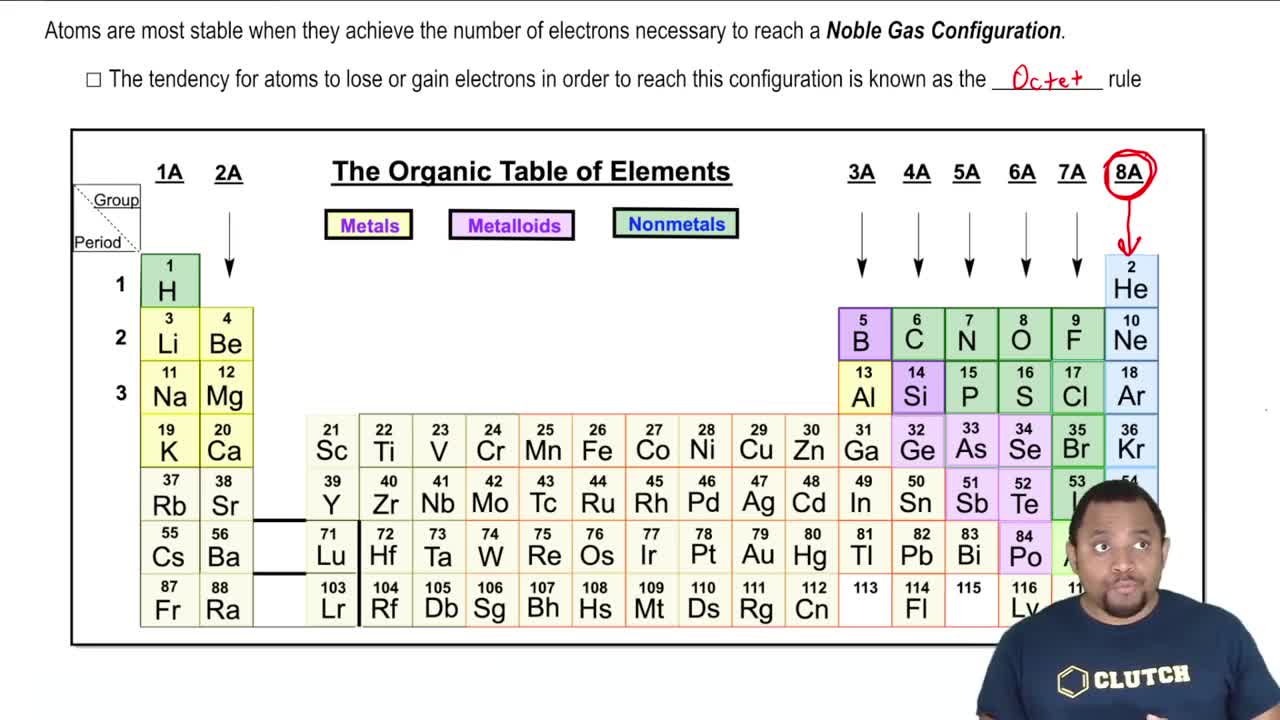 02:24
02:24How many electrons does an atom of each of the following elements need to gain to achieve a noble gas configuration? By gaining that many electrons, which noble gas configuration is achieved?
(b) Iodine
How many electrons does an atom of each of the following elements need to lose to achieve a noble gas configuration? By losing that many electrons, which noble gas configuration is achieved?
(b) Aluminum
How many electrons does an atom of each of the following elements need to gain to achieve a noble gas configuration? By gaining that many electrons, which noble gas configuration is achieved?
(a) Oxygen
How many electrons does an atom of each of the following elements need to lose to achieve a noble gas configuration? By losing that many electrons, which noble gas configuration is achieved?
(c) Magnesium
How many electrons does an atom of each of the following elements need to gain to achieve a noble gas configuration? By gaining that many electrons, which noble gas configuration is achieved?
(c) Phosphorus
How many electrons does an atom of each of the following elements need to lose to achieve a noble gas configuration? By losing that many electrons, which noble gas configuration is achieved?
(a) Beryllium