Textbook Question
Molecule A is significantly more water soluble than molecule B. Justify this observation.
849
views

 Mullins 1st EditionCh. 23 - Benzene I: Aromatic Stability and Substitution ReactionsProblem 66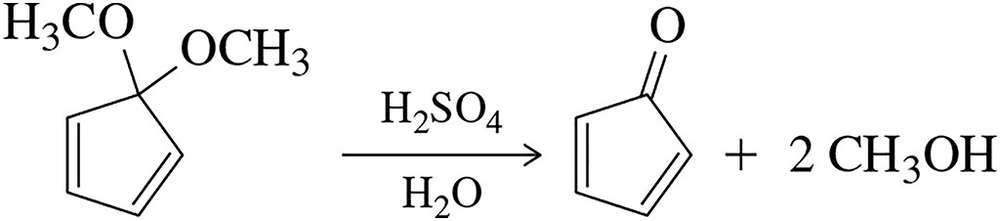
 Verified step by step guidance
 04:29
04:29
 06:34
06:34 04:31
04:31Molecule A is significantly more water soluble than molecule B. Justify this observation.
Predict the major product(s) that would result when molecules (a)–(i) are allowed to react under the following conditions. (iv) chlorocyclopentane, AlCl3, (v) 1-chloro-1-methylcyclohexane , AlCl3, (vi) PhCOCl, AlCl3. If no reaction will occur, indicate by writing NR.
(a)
Despite having only sp2-hybridized carbons and having 10 electrons (4n + 2) , the annulene shown is not aromatic. Why?
Using a Frost circle, a student drew the molecular orbital picture shown for the cyclopentadienyl anion, determining it to be antiaromatic. Do you agree with this conclusion? Why or why not?
Use a Frost circle diagram to construct the molecular orbital diagram for the molecules shown. Would you expect them to be aromatic or antiaromatic?
(c)
Suggest a synthesis of each of the molecules shown beginning with benzene.
(c)