Ch. 14 - Structural Identification I: Infrared Spectroscopy and Mass Spectrometry
Mullins - Organic Chemistry: A Learner Centered Approach 1st Edition
Mullins1st EditionOrganic Chemistry: A Learner Centered ApproachISBN: 9780137566471Not the one you use?Change textbook
Chapter 13, Problem 4

In the periodic table, the number 79.904 appears under the element bromine. What is the significance of this number?

Verified step by step guidance
1
The number 79.904 under the element bromine in the periodic table represents the atomic mass (also called atomic weight) of bromine.
Atomic mass is the weighted average of the masses of all the naturally occurring isotopes of an element, taking into account their relative abundances.
Bromine has two main isotopes: bromine-79 (with a mass of approximately 78.918 amu) and bromine-81 (with a mass of approximately 80.916 amu).
The atomic mass of bromine, 79.904, is calculated using the formula: Atomic Mass= (Isotope Mass × Relative Abundance).
The value 79.904 is not a whole number because it reflects the average mass of bromine's isotopes, weighted by their natural abundances.

Verified video answer for a similar problem:

This video solution was recommended by our tutors as helpful for the problem above.
Video duration:
3m
Was this helpful?

Key Concepts

Here are the essential concepts you must grasp in order to answer the question correctly.

Atomic Mass

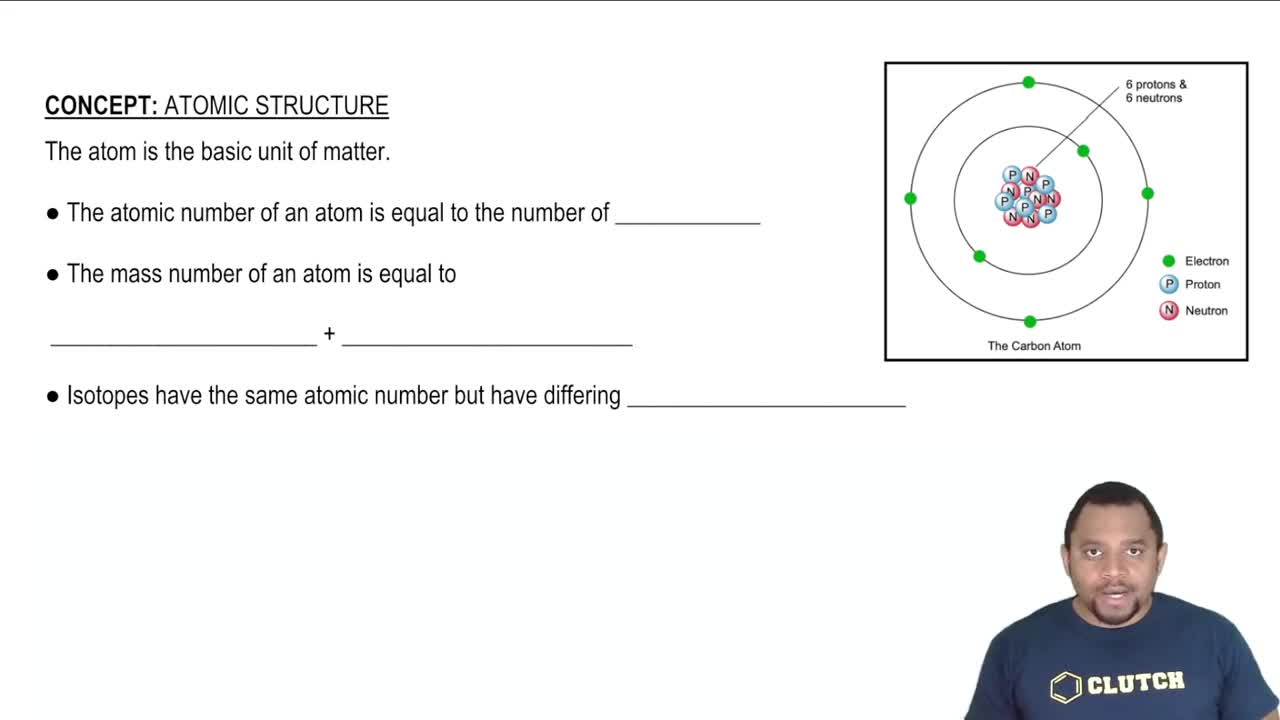
The number 79.904 represents the atomic mass of bromine, which is the weighted average mass of all the naturally occurring isotopes of bromine. Atomic mass is measured in atomic mass units (amu) and reflects both the number of protons and neutrons in an atom's nucleus, providing insight into the element's isotopic composition.
Recommended video:
Guided course
01:44
The difference between atomic numbers and atomic mass.

Isotopes

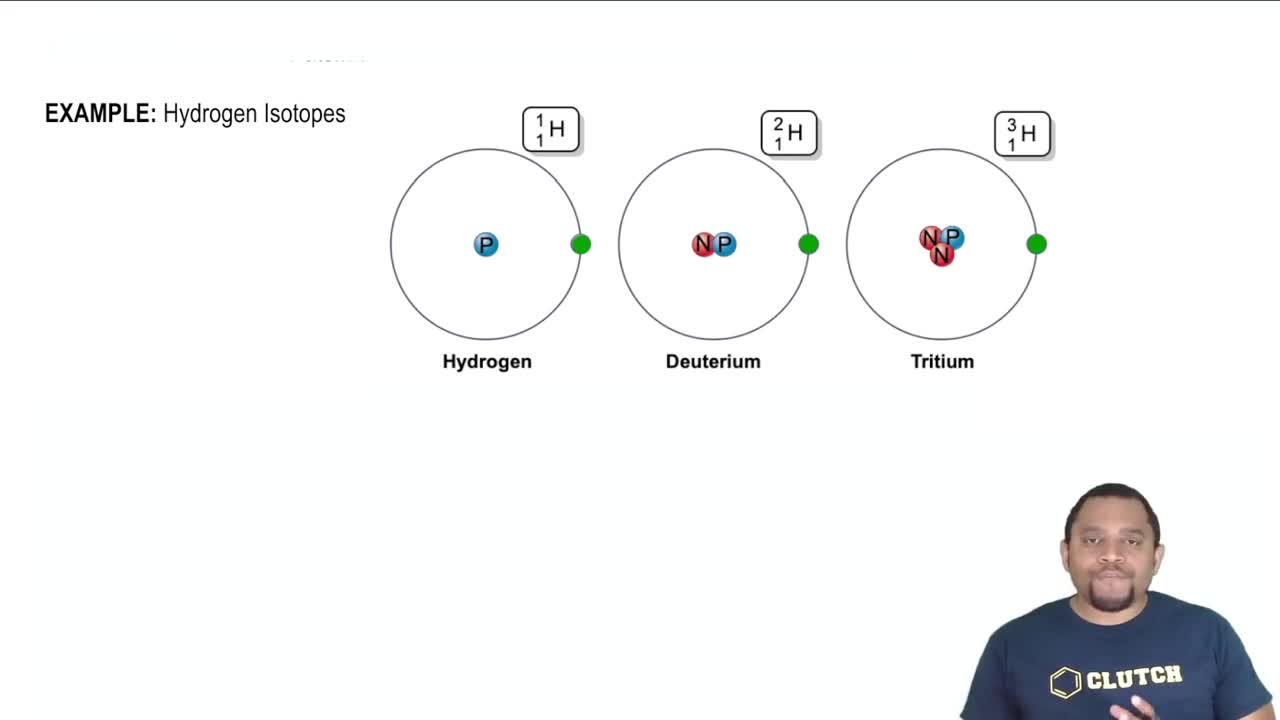
Isotopes are variants of a chemical element that have the same number of protons but different numbers of neutrons, resulting in different atomic masses. For bromine, the two stable isotopes are bromine-79 and bromine-81, which contribute to the average atomic mass of 79.904 due to their relative abundances in nature.
Recommended video:
Guided course
03:06
Understanding the hydrogen isotopes.

Periodic Table

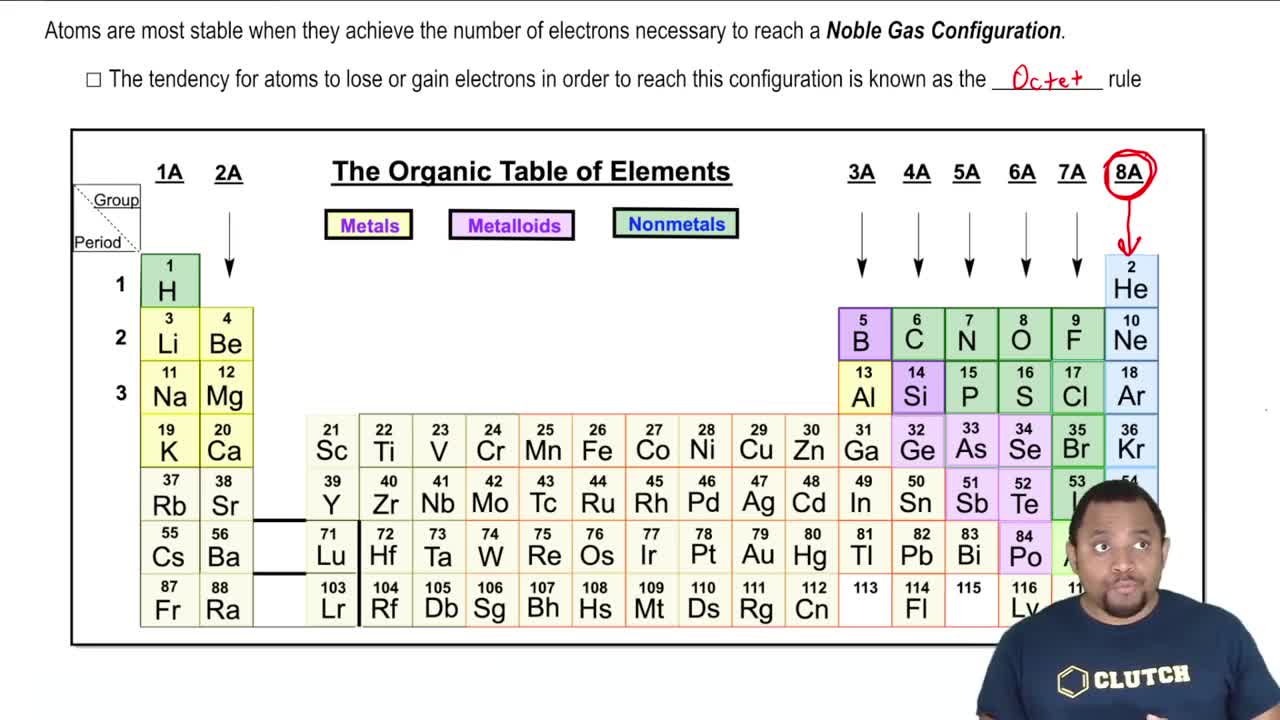
The periodic table organizes elements based on their atomic number, electron configuration, and recurring chemical properties. The atomic mass, such as 79.904 for bromine, is typically displayed below the element's symbol and provides essential information for understanding the element's behavior in chemical reactions and its physical properties.
Recommended video:
Guided course
02:24
The most important parts of the periodic table for organic chemistry