Textbook Question
(i) Classify the following molecules as aromatic, nonaromatic, or antiaromatic.
(ii) For aromatic molecules, solve for n in Hückel’s rule. For all other molecules, explain which rule of aromaticity is being broken.
(h)
444
views

 Mullins 1st EditionCh. 23 - Benzene I: Aromatic Stability and Substitution ReactionsProblem 61i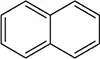
 Verified step by step guidance
 08:19
08:19
 03:54
03:54 02:58
02:58(i) Classify the following molecules as aromatic, nonaromatic, or antiaromatic.
(ii) For aromatic molecules, solve for n in Hückel’s rule. For all other molecules, explain which rule of aromaticity is being broken.
(h)
Use a Frost circle diagram to construct the molecular orbital diagram for the molecules shown. Would you expect them to be aromatic or antiaromatic?
(a)
Use a Frost circle diagram to construct the molecular orbital diagram for the molecules shown. Would you expect them to be aromatic or antiaromatic?
(c)
Use a Frost circle diagram to construct the molecular orbital diagram for the molecules shown. Would you expect them to be aromatic or antiaromatic?
(b)
(i) Classify the following molecules as aromatic, nonaromatic, or antiaromatic.
(ii) For aromatic molecules, solve for n in Hückel’s rule. For all other molecules, explain which rule of aromaticity is being broken.
(g)
(i) Classify the following molecules as aromatic, nonaromatic, or antiaromatic.
(ii) For aromatic molecules, solve for n in Hückel’s rule. For all other molecules, explain which rule of aromaticity is being broken.
(f)