Textbook Question
In the second propagation step in the bromination of toluene, Br2 is only attacked by a radical on the substituent carbon. Why?
1179
views

 Mullins 1st EditionCh. 24 - Benzene II: Reactions Influenced by the Aromatic RingProblem 40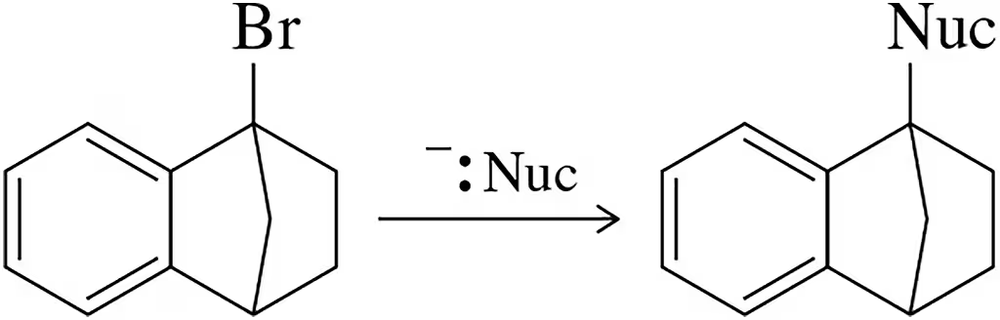
 Verified step by step guidance
 10:49
10:49
 05:58
05:58 02:53
02:53In the second propagation step in the bromination of toluene, Br2 is only attacked by a radical on the substituent carbon. Why?
In Chapter 13, we learned that epoxide opening can give different products, depending on whether the reaction occurs under acidic or basic conditions. Explain why the epoxide shown opens identically under either set of conditions.
When (R)-(1-bromoethyl)benzene is treated with sodium cyanide, a single enantiomer is produced. However, upon treatment of the same molecule with water, a mixture of two enantiomers is obtained.
(a) Explain these results.
(b) Why is only partial racemization sometimes observed?
Beginning with benzene, synthesize the benzyl bromide shown.
Oxidation of the phenol shown gives a single quinone product. Predict this product and explain why it is the only one formed.
The following reaction proceeds in good yield, despite requiring high temperature and high concentration. Identify the product you’d expect to obtain in this reaction.