Ch. 27 - Carbohydrates, Nucleic Acids, and Lipids
Mullins - Organic Chemistry: A Learner Centered Approach 1st Edition
Mullins1st EditionOrganic Chemistry: A Learner Centered ApproachISBN: 9780137566471Not the one you use?Change textbook
Chapter 26, Problem 3a

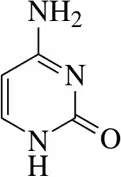
Identify the hydrogen bond donors and hydrogen bond acceptors in the following molecules.
(a) Chemical structure of a molecule with labeled hydrogen bond donors (NH2, NH) and acceptor (O).

Verified step by step guidance
1
Step 1: Identify the functional groups in the molecule. The molecule contains a hydroxyl group (-OH), an amide group (-CONH), and a carbonyl group (C=O).
Step 2: Recall the definitions of hydrogen bond donors and acceptors. Hydrogen bond donors are groups that have a hydrogen atom attached to an electronegative atom (like O, N, or F), while hydrogen bond acceptors are electronegative atoms with lone pairs of electrons that can participate in hydrogen bonding.
Step 3: Analyze the hydroxyl group (-OH). The oxygen atom has lone pairs, making it a hydrogen bond acceptor. The hydrogen attached to the oxygen can act as a hydrogen bond donor.
Step 4: Analyze the amide group (-CONH). The nitrogen atom has lone pairs, making it a hydrogen bond acceptor. The hydrogen attached to the nitrogen can act as a hydrogen bond donor.
Step 5: Analyze the carbonyl group (C=O). The oxygen atom has lone pairs, making it a hydrogen bond acceptor. However, there is no hydrogen attached to the oxygen, so it cannot act as a hydrogen bond donor.

Verified video answer for a similar problem:

This video solution was recommended by our tutors as helpful for the problem above.
Video duration:
2m
Was this helpful?

Key Concepts

Here are the essential concepts you must grasp in order to answer the question correctly.

Hydrogen Bond Donors

Hydrogen bond donors are molecules or functional groups that contain a hydrogen atom covalently bonded to a highly electronegative atom, such as oxygen or nitrogen. This electronegative atom pulls electron density away from the hydrogen, creating a partial positive charge on the hydrogen, which can interact with lone pairs on other electronegative atoms, forming hydrogen bonds.
Recommended video:
Guided course
00:48
The definition of hydrogenation.

Hydrogen Bond Acceptors

Hydrogen bond acceptors are atoms or groups that possess lone pairs of electrons and can interact with the partially positive hydrogen of a hydrogen bond donor. Common hydrogen bond acceptors include electronegative atoms like oxygen, nitrogen, and fluorine. The ability of these atoms to accept hydrogen bonds is crucial in determining the stability and properties of molecular interactions.
Recommended video:
Guided course
00:48
The definition of hydrogenation.

Molecular Structure and Interactions

Understanding the molecular structure is essential for identifying hydrogen bond donors and acceptors. The arrangement of atoms, presence of functional groups, and overall geometry of a molecule dictate how it can participate in hydrogen bonding. Analyzing the structure allows one to pinpoint which atoms can donate or accept hydrogen bonds, influencing the molecule's reactivity and interactions with other compounds.
Recommended video:
2:41
Interactions within the Tertiary Structure Concept 2