Textbook Question
For each pair of reactions, predict which will happen more quickly. [For (c) and (d), the more substituted carbocation is more stable due to hyperconjugation.]
(c)
874
views

 Mullins 1st EditionCh. 5 - Chemical Reaction Analysis: Thermodynamics and KineticsProblem 39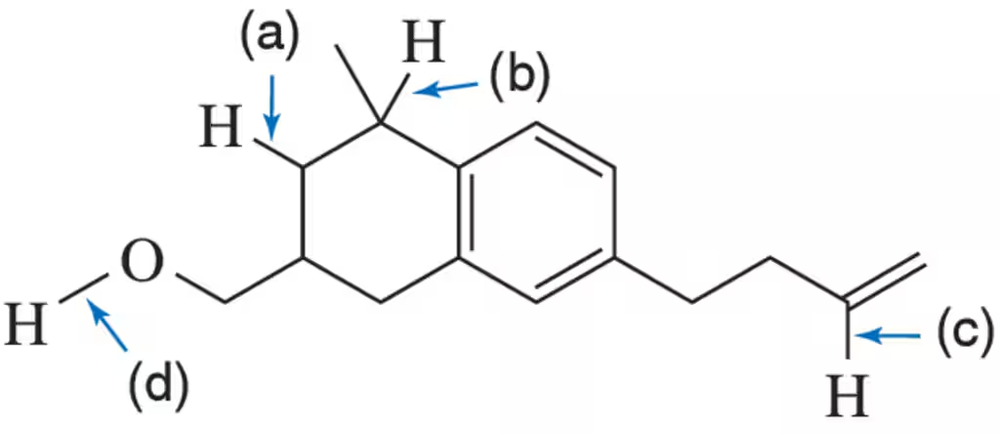
 Verified step by step guidance
 04:09
04:09
 06:00
06:00 03:24
03:24For each pair of reactions, predict which will happen more quickly. [For (c) and (d), the more substituted carbocation is more stable due to hyperconjugation.]
(c)
Using bond-dissociation energies, identify the most stable radical. Justify the difference in stability based on the structure.
(a)
Using bond-dissociation energies, identify the most stable radical. Justify the difference in stability based on the structure.
(d) I• vs •OH
Using bond-dissociation energies, identify the most stable radical. Justify the difference in stability based on the structure.
(c)
For each pair of reactions, predict which will happen more quickly.
[For (a) and (b), think about the stability of the bases involved.]
(a)
The following are all substitution reactions, two of which we study in later chapters. With no knowledge of mechanism, what would you expect the ratio of products to be for each reaction, based on a random statistical distribution?
(a) Replacing a hydrogen (H) with chlorine (Cl):