
Ch. 9 - Alkenes II: Oxidation and Reduction
Mullins - Organic Chemistry: A Learner Centered Approach 1st Edition
Mullins1st EditionOrganic Chemistry: A Learner Centered ApproachISBN: 9780137566471Not the one you use?Change textbook
Chapter 8, Problem 15

Calculate the atom economy of the reaction in Figure 9.24. [Catalysts are not included in the atom economy calculation.]

Verified step by step guidance
1
Step 1: Understand the concept of atom economy. Atom economy is a measure of the efficiency of a chemical reaction in terms of how much of the reactants' mass is incorporated into the desired product. It is calculated using the formula: Atom Economy = (Molecular Weight of Desired Product / Total Molecular Weight of Reactants) × 100.
Step 2: Identify the desired product and reactants from the reaction. The desired product is the epoxide (cyclopropane with an oxygen atom), and the reactants include the alkene (starting material) and hydrogen peroxide (H₂O₂). Catalysts such as FeCl₃·H₂O and 1-methyl imidazole are not included in the atom economy calculation.
Step 3: Determine the molecular weights of the desired product and reactants. Use the molecular formula of each compound and the atomic weights of the elements (C = 12, H = 1, O = 16) to calculate their molecular weights. For example, calculate the molecular weight of the alkene and H₂O₂ as reactants, and the epoxide as the product.
Step 4: Add the molecular weights of all reactants to find the total molecular weight of reactants. This includes the alkene and H₂O₂, but excludes the catalysts.
Step 5: Apply the atom economy formula. Divide the molecular weight of the desired product (epoxide) by the total molecular weight of the reactants, and multiply by 100 to express the atom economy as a percentage.

Verified video answer for a similar problem:

This video solution was recommended by our tutors as helpful for the problem above.
Video duration:
7m
Was this helpful?

Key Concepts

Here are the essential concepts you must grasp in order to answer the question correctly.

Atom Economy

Atom economy is a measure of the efficiency of a chemical reaction in terms of how well atoms from the reactants are utilized in the final product. It is calculated by dividing the molar mass of the desired product by the total molar mass of all reactants, then multiplying by 100 to express it as a percentage. A higher atom economy indicates a more efficient reaction, minimizing waste and maximizing the use of resources.
Recommended video:
Guided course
01:44
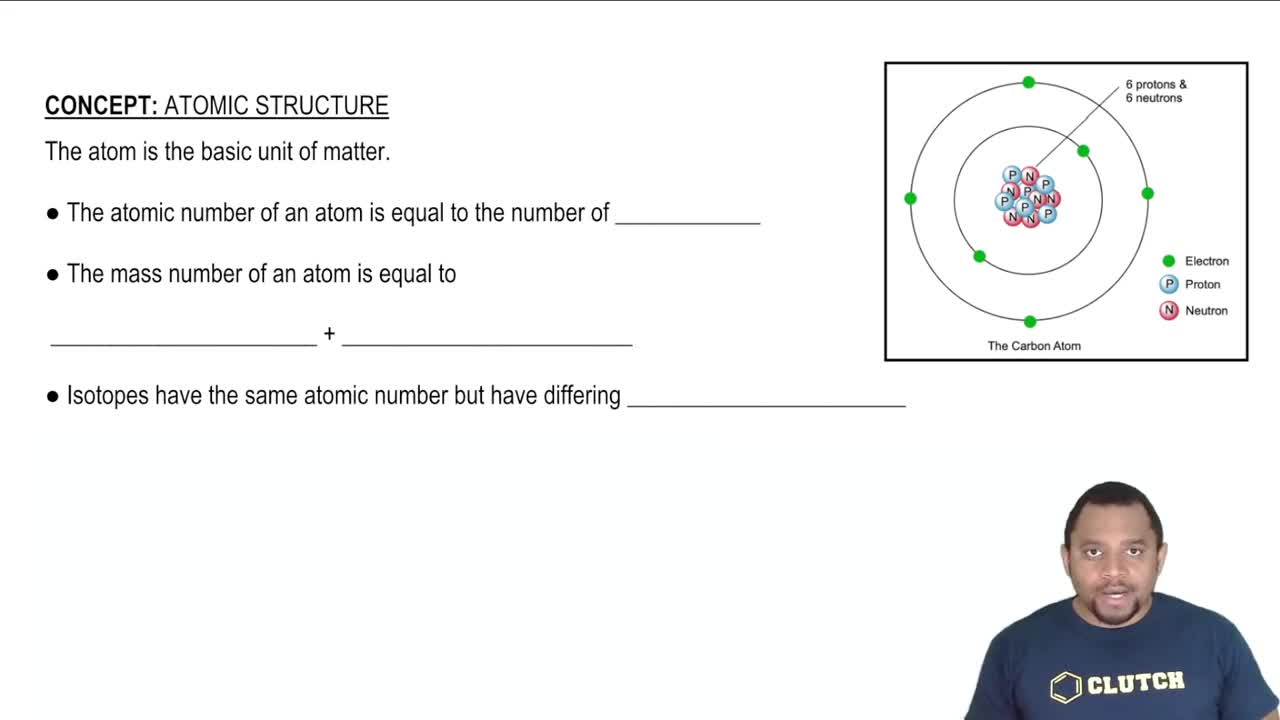
The difference between atomic numbers and atomic mass.

Molar Mass Calculation

Molar mass is the mass of one mole of a substance, typically expressed in grams per mole (g/mol). To calculate the molar mass of a compound, one must sum the atomic masses of all the atoms in its molecular formula. This calculation is essential for determining the total mass of reactants and products in a reaction, which is necessary for calculating atom economy.
Recommended video:
Guided course
01:25
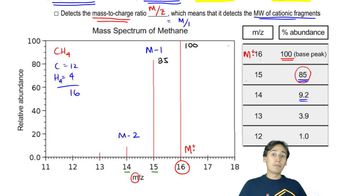
How to Read a Mass Spectrum

Catalysts in Reactions

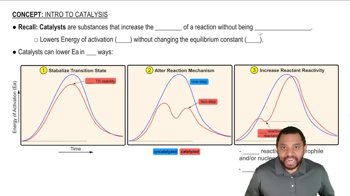
Catalysts are substances that increase the rate of a chemical reaction without being consumed in the process. While they play a crucial role in facilitating reactions, they are not included in the atom economy calculation because they do not alter the overall mass of reactants or products. Understanding the role of catalysts helps clarify the focus on the main reactants and products when assessing atom economy.
Recommended video:
2:10
Introduction to Catalysis Concept 1