Ch. 9 - Alkenes II: Oxidation and Reduction
Mullins - Organic Chemistry: A Learner Centered Approach 1st Edition
Mullins1st EditionOrganic Chemistry: A Learner Centered ApproachISBN: 9780137566471Not the one you use?Change textbook
Chapter 8, Problem 45d(x)

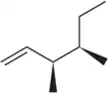
Predict the product(s) that would result when the alkenes are allowed to react under the following conditions: (x) D2, Pd/C.
(d) Chemical structure of an alkene with double bonds, illustrating a reaction setup for hydrogenation with D2 and Pd/C.

Verified step by step guidance
1
Step 1: Recognize the type of reaction occurring. The reaction involves an alkene reacting with deuterium gas (D₂) in the presence of a palladium catalyst (Pd/C). This is a catalytic hydrogenation reaction, where the double bond in the alkene is reduced to a single bond by the addition of deuterium atoms.
Step 2: Understand the mechanism of the reaction. The palladium catalyst adsorbs the D₂ molecules onto its surface, breaking the D-D bond and forming activated deuterium atoms. These atoms are then transferred to the alkene, reducing the double bond.
Step 3: Identify the structure of the starting alkene. Determine the position of the double bond in the alkene and consider the stereochemistry of the molecule, as the addition of deuterium is typically syn (both deuterium atoms add to the same face of the double bond).
Step 4: Predict the product. Replace the double bond in the alkene with single bonds to deuterium atoms. Ensure that the stereochemistry of the product reflects the syn addition of deuterium.
Step 5: Verify the product. Check that the resulting molecule is fully saturated (no double bonds remain) and that the deuterium atoms are correctly added to the original positions of the double bond.

Verified video answer for a similar problem:

This video solution was recommended by our tutors as helpful for the problem above.
Video duration:
3m
Was this helpful?

Key Concepts

Here are the essential concepts you must grasp in order to answer the question correctly.

Alkene Hydrogenation

Alkene hydrogenation is a chemical reaction where hydrogen (H₂) is added across the double bond of an alkene, converting it into an alkane. This process typically requires a catalyst, such as palladium (Pd), to facilitate the reaction. The addition of hydrogen occurs in a syn fashion, meaning that both hydrogen atoms add to the same side of the double bond, resulting in a saturated product.
Recommended video:
Guided course
00:48
The definition of hydrogenation.

Deuterium (D₂) as a Reagent

Deuterium (D₂) is an isotope of hydrogen that contains one neutron, making it heavier than regular hydrogen. When used in hydrogenation reactions, deuterium replaces hydrogen atoms in the product, resulting in deuterated compounds. This is significant in organic chemistry for tracing reactions and studying mechanisms, as the presence of deuterium can affect the physical and chemical properties of the resulting molecules.
Recommended video:
Guided course
06:47
Monosaccharides - D and L Isomerism

Catalytic Conditions (Pd/C)

Palladium on carbon (Pd/C) is a widely used catalyst in organic reactions, particularly in hydrogenation. The palladium provides active sites for the adsorption of both the alkene and hydrogen, facilitating the reaction. The carbon support enhances the surface area and stability of the palladium, making the catalyst effective for promoting the addition of hydrogen or deuterium to alkenes under mild conditions.
Recommended video:
3:21
Catalytic Allylic Alkylation Concept 1