Ch. 2 - General Chemistry Translated: Finding the Electrons
Mullins - Organic Chemistry: A Learner Centered Approach 1st Edition
Mullins1st EditionOrganic Chemistry: A Learner Centered ApproachISBN: 9780137566471Not the one you use?Change textbook
Chapter 1, Problem 7

Bromine-79 (50.7% abundance) has an atomic mass of 78.918 amu, whereas bromine-81 (49.3% abundance) has an atomic mass of 80.916 amu. From these data, calculate the average atomic mass of bromine that you would expect to see in the periodic table.

Verified step by step guidance
1
Step 1: Understand the concept of average atomic mass. The average atomic mass of an element is calculated as the weighted average of the atomic masses of its isotopes, based on their relative abundances.
Step 2: Write the formula for calculating the average atomic mass: Average   atomic   mass = ( Fractional   abundance   of   isotope   1   ×   Mass   of   isotope   1 ) + ( Fractional   abundance   of   isotope   2   ×   Mass   of   isotope   2 )
Step 3: Convert the percentage abundances of bromine-79 and bromine-81 into fractional abundances by dividing each percentage by 100. For bromine-79, the fractional abundance is 50.7/100, and for bromine-81, the fractional abundance is 49.3/100.
Step 4: Substitute the fractional abundances and atomic masses of bromine-79 and bromine-81 into the formula. This gives: (0.507×78.918)+(0.493×80.916).
Step 5: Perform the multiplication and addition to calculate the average atomic mass. This result will represent the average atomic mass of bromine as it appears in the periodic table.

Verified video answer for a similar problem:

This video solution was recommended by our tutors as helpful for the problem above.
Video duration:
6m
Was this helpful?

Key Concepts

Here are the essential concepts you must grasp in order to answer the question correctly.

Atomic Mass

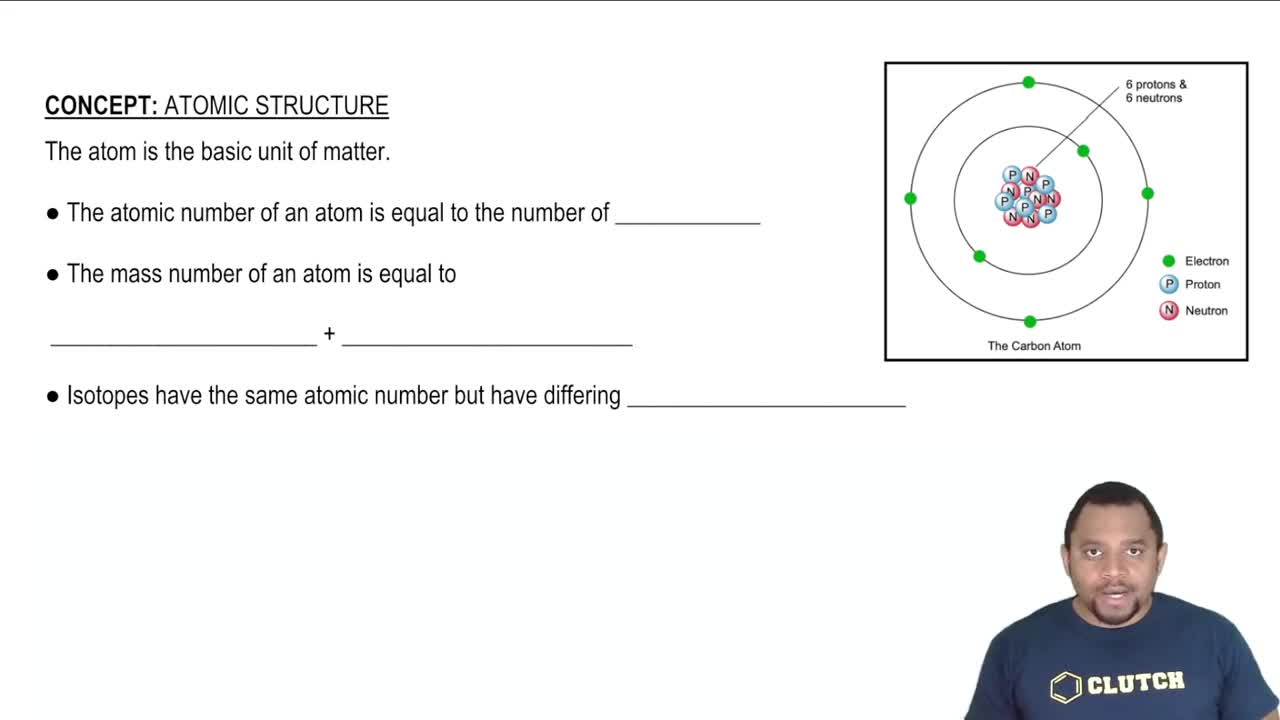
Atomic mass is the weighted average mass of an element's isotopes, measured in atomic mass units (amu). It reflects both the mass of each isotope and its relative abundance in nature. For bromine, the atomic masses of its isotopes, bromine-79 and bromine-81, are crucial for calculating the average atomic mass.
Recommended video:
Guided course
01:44
The difference between atomic numbers and atomic mass.

Isotopes

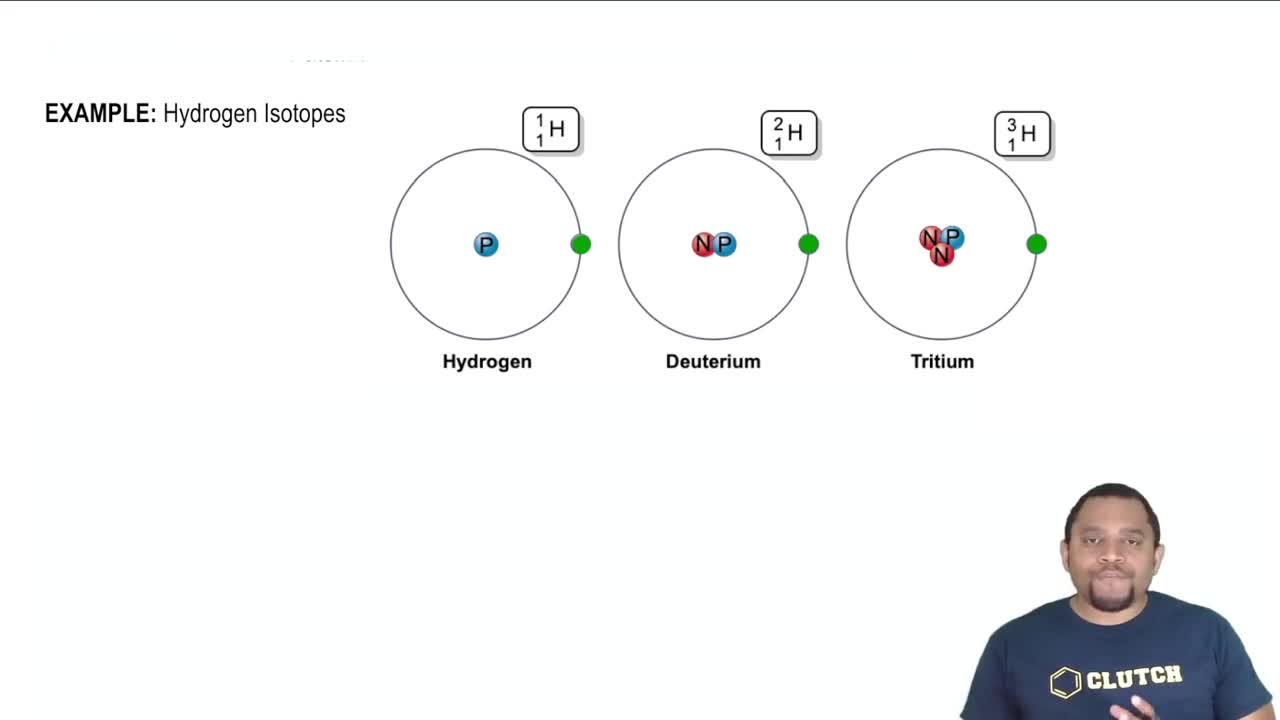
Isotopes are variants of a chemical element that have the same number of protons but different numbers of neutrons, resulting in different atomic masses. In the case of bromine, the two isotopes, bromine-79 and bromine-81, have different atomic masses and relative abundances, which must be considered when calculating the average atomic mass.
Recommended video:
Guided course
03:06
Understanding the hydrogen isotopes.

Weighted Average Calculation

A weighted average calculation involves multiplying each value by its corresponding weight (or abundance) and then summing these products before dividing by the total of the weights. For bromine, this means calculating the contributions of each isotope's mass based on its abundance to find the average atomic mass that appears on the periodic table.
Recommended video:
Guided course
04:37
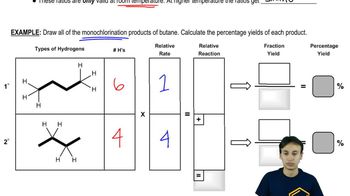
Draw all of the monochlorination products and calculate percentage yields.