Ch. 2 - General Chemistry Translated: Finding the Electrons
Mullins - Organic Chemistry: A Learner Centered Approach 1st Edition
Mullins1st EditionOrganic Chemistry: A Learner Centered ApproachISBN: 9780137566471Not the one you use?Change textbook
Chapter 1, Problem 50

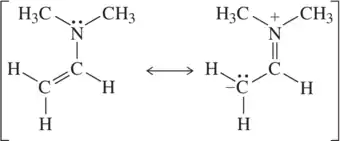
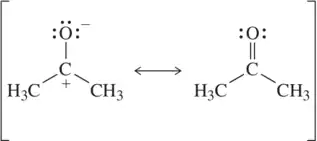
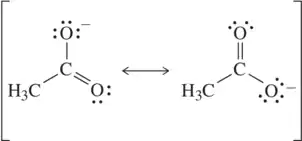
i) Which of the following resonance structures represents the 'actual' structure of the molecule shown? (ii) Which contributes more to the resonance hybrid? (iii) Why?
(a) Two resonance structures of a molecule with nitrogen and carbon atoms, showing electron movement and charge distribution.
(b) Two resonance structures of a molecule with carbon and oxygen atoms, showing charge distribution and double bonds.
(c) Two resonance structures of a molecule with carbon and oxygen atoms, showing electron dot representations and bond arrangements.

Verified step by step guidance
1
Examine the resonance structures (a), (b), and (c) to determine if they follow the rules of resonance. Ensure that all structures obey the octet rule (if applicable), conserve the total number of electrons, and maintain proper formal charges.
Identify the 'actual' structure of the molecule by understanding that the true structure is a resonance hybrid, which is a weighted average of all valid resonance structures. None of the individual resonance structures fully represents the molecule; instead, the hybrid does.
To determine which resonance structure contributes more to the resonance hybrid, evaluate the stability of each structure. Stability is influenced by factors such as: (i) minimal formal charges, (ii) negative charges on more electronegative atoms, and (iii) avoidance of charge separation unless necessary.
Compare the resonance structures (a), (b), and (c) based on the criteria above. For example, a structure with no formal charges or with charges placed on appropriate atoms (e.g., negative charge on oxygen) will contribute more to the hybrid.
Explain why the most stable resonance structure contributes more to the hybrid. The resonance hybrid is closer in character to the most stable structure because it minimizes energy and maximizes stability, which is a fundamental principle in resonance theory.

Verified video answer for a similar problem:

This video solution was recommended by our tutors as helpful for the problem above.
Video duration:
5m
Was this helpful?

Key Concepts

Here are the essential concepts you must grasp in order to answer the question correctly.

Resonance Structures

Resonance structures are different Lewis structures for the same molecule that depict the same arrangement of atoms but differ in the placement of electrons. These structures are used to represent the delocalization of electrons within a molecule, which cannot be accurately depicted by a single Lewis structure. The actual structure of the molecule is a resonance hybrid, a weighted average of all valid resonance forms.
Recommended video:
Guided course
03:04
Drawing Resonance Structures

Resonance Hybrid

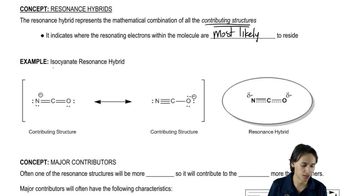
The resonance hybrid is the actual structure of a molecule that is formed by combining all the resonance structures. It reflects the delocalization of electrons across the molecule, resulting in bond lengths and angles that are intermediate between those predicted by the individual resonance forms. The hybrid is more stable than any single resonance structure due to the distribution of electron density.
Recommended video:
Guided course
03:24
How to draw a resonance hybrid.

Contribution to Resonance Hybrid

Not all resonance structures contribute equally to the resonance hybrid; some are more stable and thus have a greater contribution. Factors influencing this include the octet rule, charge distribution, and the presence of formal charges. Structures that minimize formal charges and maintain an octet for all atoms are typically more significant contributors to the resonance hybrid.
Recommended video:
Guided course
03:24
How to draw a resonance hybrid.