Ch. 4 - Acids and Bases: Electron Flow
Mullins - Organic Chemistry: A Learner Centered Approach 1st Edition
Mullins1st EditionOrganic Chemistry: A Learner Centered ApproachISBN: 9780137566471Not the one you use?Change textbook
Chapter 3, Problem 66c

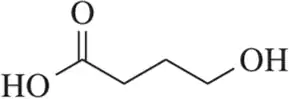
For each of the following molecules, predict the product that would form upon reaction of a single equivalent of a strong base.
(c) Chemical structure of a molecule with hydroxyl groups and a carbonyl group, indicating potential reactions with strong bases.

Verified step by step guidance
1
Identify the functional groups in the molecule. The structure contains a hydroxyl group (-OH) on the left side and a carboxylic acid group (-COOH) on the right side.
Determine the reactivity of the functional groups with a strong base. A strong base will deprotonate the most acidic hydrogen in the molecule. The carboxylic acid group is more acidic than the hydroxyl group due to resonance stabilization of the carboxylate anion.
Predict the site of deprotonation. The hydrogen attached to the oxygen in the carboxylic acid group will be removed by the strong base, forming a carboxylate anion (R-COO⁻).
Write the resulting structure after deprotonation. Replace the hydrogen in the carboxylic acid group with a negative charge on the oxygen atom, indicating the formation of the carboxylate anion.
Consider the stability of the product. The carboxylate anion is stabilized by resonance, making it the favored product of the reaction with a strong base.

Verified video answer for a similar problem:

This video solution was recommended by our tutors as helpful for the problem above.
Video duration:
1m
Was this helpful?

Key Concepts

Here are the essential concepts you must grasp in order to answer the question correctly.

Strong Bases in Organic Chemistry

Strong bases, such as sodium hydroxide (NaOH) or potassium tert-butoxide (KOtBu), are capable of deprotonating weak acids. In organic chemistry, they are often used to initiate reactions by removing protons from functional groups, such as alcohols or carboxylic acids, leading to the formation of alkoxides or carboxylate ions.
Recommended video:
Guided course
00:56
What is an organic molecule?

Deprotonation of Alcohols

Alcohols contain hydroxyl (-OH) groups that can act as weak acids. When a strong base is introduced, it can deprotonate the alcohol, resulting in the formation of an alkoxide ion. This process is crucial in many organic reactions, as the alkoxide can act as a nucleophile in subsequent steps.
Recommended video:
Guided course
01:01
How to name alcohols

Reaction Mechanisms

Understanding reaction mechanisms is essential for predicting the products of chemical reactions. In this case, the mechanism involves the deprotonation of hydroxyl groups by a strong base, leading to the formation of reactive intermediates that can further react with other molecules, ultimately determining the final product of the reaction.
Recommended video:
Guided course
02:16
Heck Reaction Mechanism