Ch. 4 - Acids and Bases: Electron Flow
Mullins - Organic Chemistry: A Learner Centered Approach 1st Edition
Mullins1st EditionOrganic Chemistry: A Learner Centered ApproachISBN: 9780137566471Not the one you use?Change textbook
Chapter 3, Problem 66d

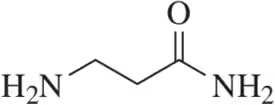
For each of the following molecules, predict the product that would form upon reaction of a single equivalent of a strong base.
(d) Chemical structure of a molecule with an amine group (H2N) and a carbonyl group (C=O) indicating potential reactions with a strong base.

Verified step by step guidance
1
Identify the functional groups in the molecule. The given molecule contains an amine group (-NH2), a ketone group (C=O), and another amine group (-NH2) attached to the cyclohexane ring.
Determine the reactivity of each functional group with a strong base. Amines are basic and can act as nucleophiles, while the ketone group can undergo deprotonation at the alpha-carbon (the carbon adjacent to the carbonyl group) due to the acidity of the alpha-hydrogen.
Focus on the alpha-carbon of the ketone group. A strong base will abstract the alpha-hydrogen, forming an enolate ion. This is because the alpha-hydrogen is acidic due to resonance stabilization of the enolate ion.
Write the resonance structures of the enolate ion formed. The negative charge on the alpha-carbon can delocalize onto the oxygen atom of the carbonyl group, stabilizing the enolate ion.
Consider the overall product. The reaction with a single equivalent of a strong base will result in the formation of the enolate ion, which is the deprotonated form of the molecule at the alpha-carbon.

Verified video answer for a similar problem:

This video solution was recommended by our tutors as helpful for the problem above.
Video duration:
1m
Was this helpful?

Key Concepts

Here are the essential concepts you must grasp in order to answer the question correctly.

Strong Bases in Organic Chemistry

Strong bases, such as sodium hydroxide (NaOH) or potassium tert-butoxide (KOtBu), are capable of deprotonating weak acids. In organic reactions, they can facilitate nucleophilic attacks or promote elimination reactions. Understanding the strength and reactivity of the base is crucial for predicting the outcome of reactions involving functional groups like amines and carbonyls.
Recommended video:
Guided course
00:56
What is an organic molecule?

Amine Reactivity

Amines are basic due to the presence of a lone pair of electrons on the nitrogen atom, which can accept protons. When reacting with strong bases, amines can undergo deprotonation, leading to the formation of an anionic species. This property is essential for predicting how amines will behave in the presence of strong bases, especially in the context of forming new bonds or rearranging structures.
Recommended video:
Guided course
07:12
Reductive Amination

Carbonyl Compounds and Nucleophilicity

Carbonyl compounds, such as ketones and aldehydes, are electrophilic due to the partial positive charge on the carbon atom. They can react with nucleophiles, including deprotonated amines, to form new products. Understanding the reactivity of carbonyls is vital for predicting the products of reactions involving strong bases and amines, as they can lead to the formation of imines or other derivatives.
Recommended video:
Guided course
01:40
Defining meso compounds.