Ch. 4 - Acids and Bases: Electron Flow
Mullins - Organic Chemistry: A Learner Centered Approach 1st Edition
Mullins1st EditionOrganic Chemistry: A Learner Centered ApproachISBN: 9780137566471Not the one you use?Change textbook
Chapter 3, Problem 20a(i,ii,iii)

In the following reactions,
(i) identify the acid and base,
(ii) identify the most electron-rich atom in the base,
(iii) identify the most acidic hydrogen in the acid,
(a) Chemical reaction showing an alkyne reacting with hydrobromic acid, indicating acid-base interaction.

Verified step by step guidance
1
Step 1: Begin by recalling the definitions of acids and bases according to the Brønsted-Lowry theory. An acid is a species that donates a proton (H⁺), while a base is a species that accepts a proton. Examine the reaction provided to identify which molecule donates a proton and which molecule accepts it.
Step 2: Once the acid and base are identified, focus on the base. To determine the most electron-rich atom in the base, look for atoms with lone pairs of electrons or negative charges, as these are typically the sites of high electron density.
Step 3: Next, analyze the acid to identify the most acidic hydrogen. The most acidic hydrogen is usually bonded to an electronegative atom (such as oxygen or nitrogen) or is part of a functional group that stabilizes the conjugate base after the hydrogen is removed.
Step 4: Consider resonance effects and inductive effects in the acid molecule. Resonance stabilization of the conjugate base or electron-withdrawing groups near the acidic hydrogen can increase its acidity.
Step 5: Summarize your findings by clearly stating the acid, base, the most electron-rich atom in the base, and the most acidic hydrogen in the acid. Ensure that your reasoning is based on the chemical structure and properties of the molecules involved.

Verified video answer for a similar problem:

This video solution was recommended by our tutors as helpful for the problem above.
Video duration:
3m
Was this helpful?

Key Concepts

Here are the essential concepts you must grasp in order to answer the question correctly.

Acids and Bases

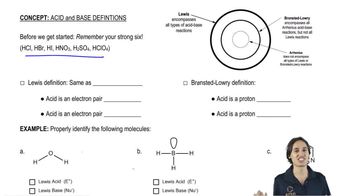
In organic chemistry, acids are substances that can donate a proton (H+) to a base, which is a substance that can accept a proton. The Brønsted-Lowry theory defines acids and bases in terms of proton transfer, while the Lewis theory expands this definition to include electron pair donation and acceptance. Understanding these definitions is crucial for identifying acids and bases in chemical reactions.
Recommended video:
Guided course
02:49
The Lewis definition of acids and bases.

Electron-Rich Atoms

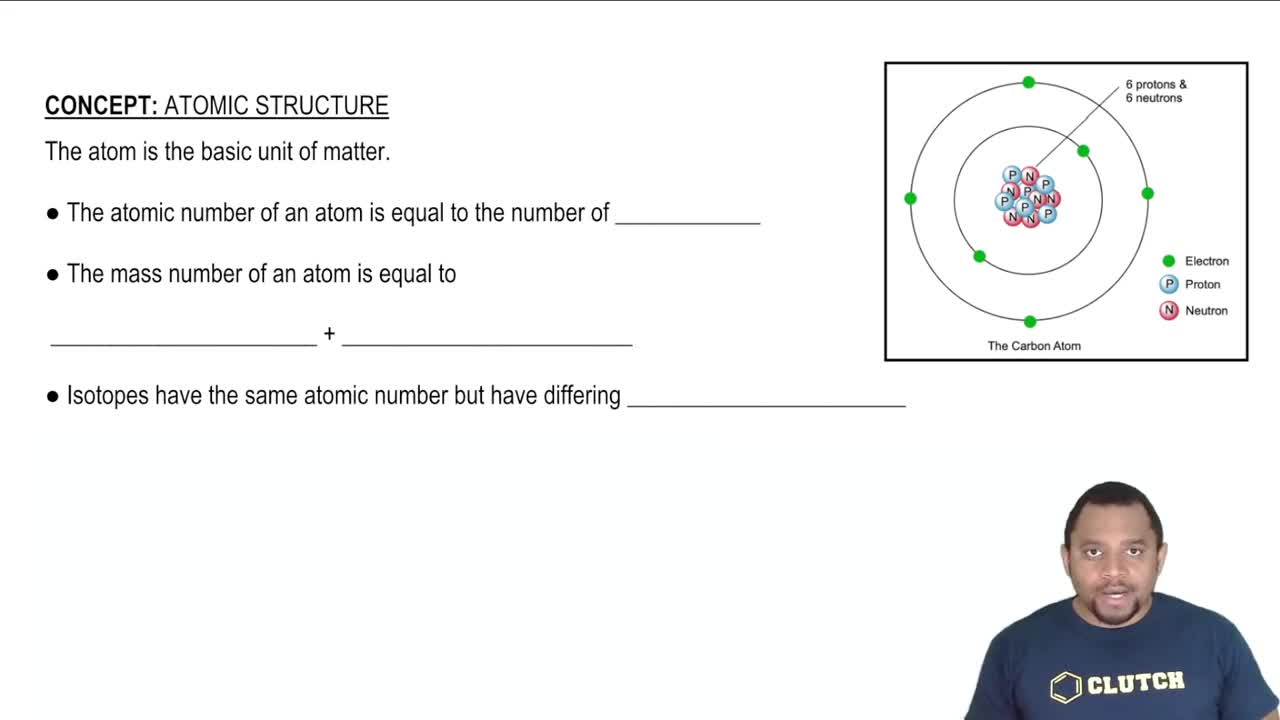
Electron-rich atoms are typically those that possess lone pairs of electrons or are part of a negatively charged species. In the context of bases, the most electron-rich atom is often the one that can most readily donate its electrons to form a bond with a proton. Identifying this atom is essential for understanding the reactivity and strength of the base in acid-base reactions.
Recommended video:
Guided course
01:44
The difference between atomic numbers and atomic mass.

Acidic Hydrogens

The most acidic hydrogen in an acid is the hydrogen atom that is most easily removed as a proton (H+). This is often determined by the stability of the resulting conjugate base after deprotonation. Factors such as electronegativity, resonance, and inductive effects influence the acidity of hydrogen atoms, making it important to analyze these aspects when identifying the most acidic hydrogen.
Recommended video:
Guided course
00:48
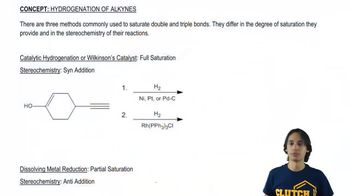
The definition of hydrogenation.